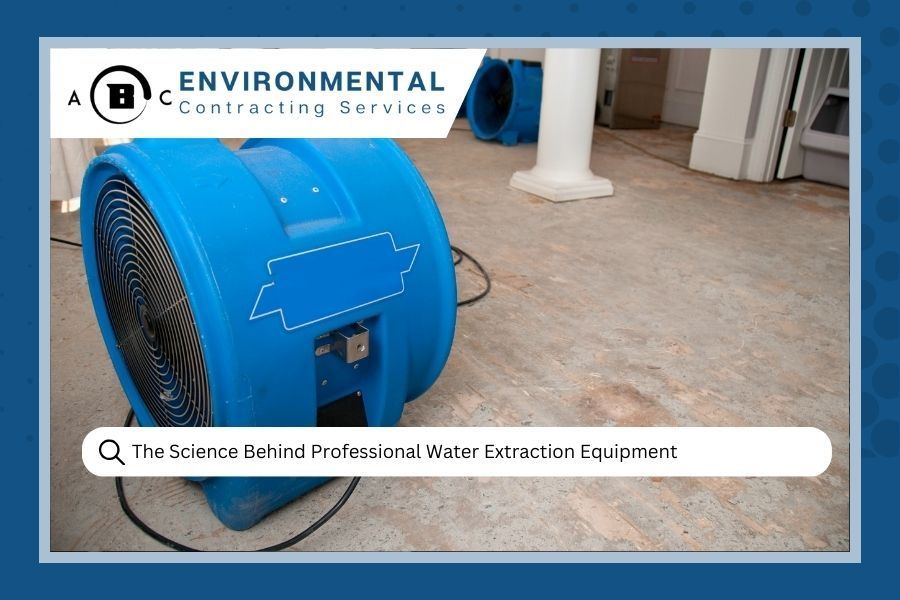
The Science Behind Professional Water Extraction Equipment
Jump To:
When water floods your St. Louis home, every minute counts. The equipment used during water damage restoration directly determines whether your floors can be saved or need replacement, whether mold takes hold, and ultimately how much the entire ordeal costs you.
Here at ABC Environmental Contracting Services, we've been responding to water emergencies across the Metro East and greater St. Louis area for over 20 years. We've seen what happens when homeowners try the DIY approach with rental equipment. The science behind professional water extraction isn't complicated, but the technology gap between consumer and commercial equipment is massive.
Why Professional Extraction Equipment Changes Everything
Water doesn't just sit on your floor waiting to be cleaned up. It penetrates. Within the first hour, water seeps into carpet padding, wicks up drywall, and saturates subfloor materials. According to the IICRC S500 Standard for water damage restoration, the goal is removing water and achieving dry conditions within 24 to 48 hours to prevent secondary damage.
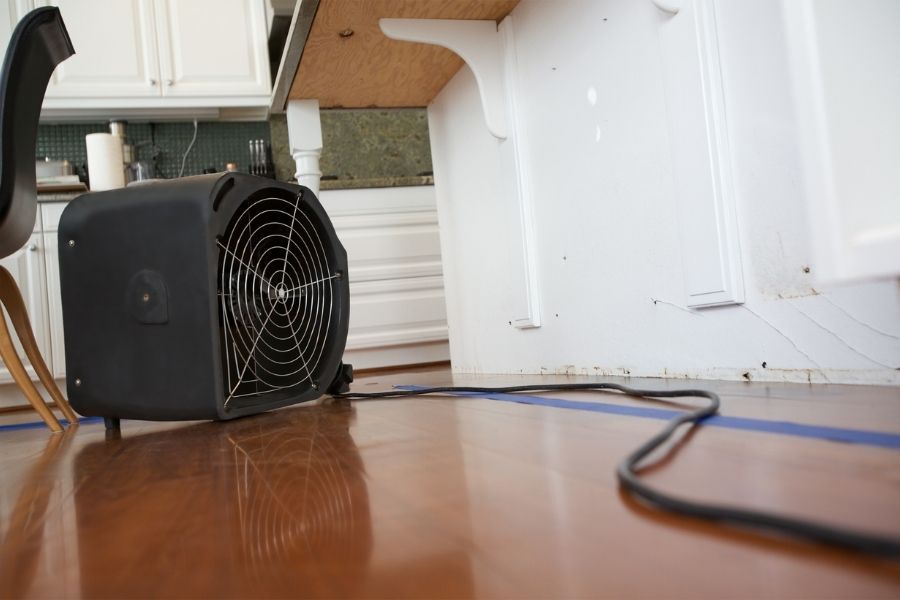
Commercial air movers and dehumidifiers work together to save hardwood flooring that would otherwise buckle beyond repair.
The Extraction Rate Problem
A typical wet/dry shop vacuum from your local hardware store extracts roughly 5 to 10 gallons of water per hour. Professional truck-mounted extractors pull 50 to 100 gallons per minute. That's per minute versus per hour.
When your basement has 3 inches of standing water covering 500 square feet, you're looking at approximately 935 gallons. With rental equipment, you're spending 90 plus hours on extraction alone. Professional equipment handles that volume in under 20 minutes.
Dealing With Water Damage Right Now?
Our veteran-owned team responds 24/7 across the St. Louis metro area with commercial-grade equipment.
Get Emergency Help NowWater Extraction Technology: A Breakdown
Different materials and situations require different approaches. Professional restoration companies bring multiple tools to handle each scenario.
Truck-Mounted Extraction Systems
These systems use gas-powered engines to generate serious suction, often exceeding 15 inches of mercury vacuum pressure. Because the power source stays in the truck, there's no electrical load on your home's circuits and no risk of shock hazards in flooded areas.
Weighted Extraction Tools
Carpet and padding hold water like a sponge. Professional technicians use weighted extraction tools that compress carpet fibers and force trapped water to the surface. This technique removes an additional 20 to 30 percent of moisture that standard extraction misses.
For homeowners wondering why delaying extraction costs so much, this trapped moisture continues damaging materials long after visible water is gone.
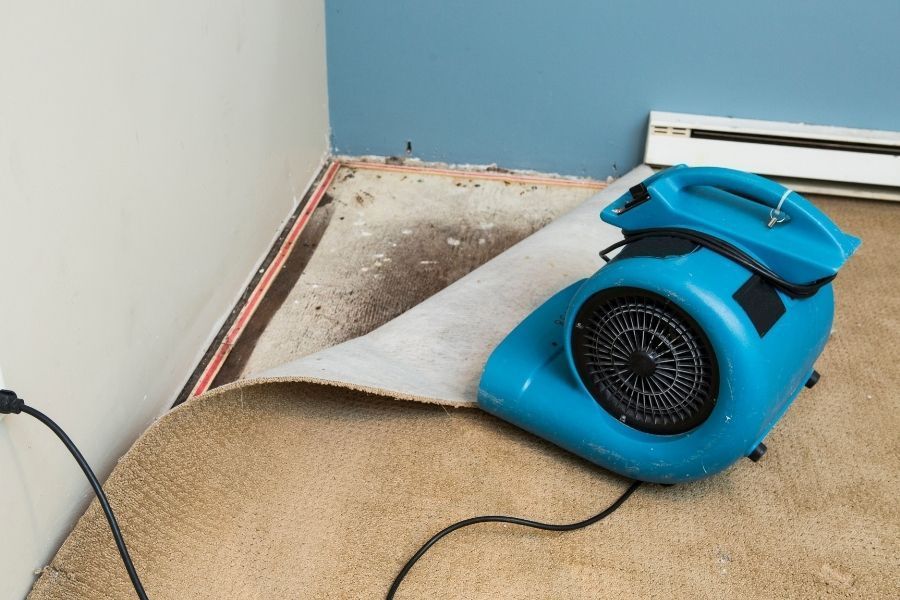
Lifting carpet allows extraction and drying of both the carpet backing and subfloor, a technique rental equipment cannot replicate.
Why Rental Equipment Often Fails
We've cleaned up after enough failed DIY attempts to be direct about the limitations. Rental carpet cleaners and wet/dry vacuums were designed for surface cleaning, not emergency water removal.
| Factor | Rental Equipment | Professional Equipment |
|---|---|---|
| Extraction Rate | 5-10 gallons/hour | 50-100 gallons/minute |
| Vacuum Pressure | 2-4 inches Hg | 12-15+ inches Hg |
| Moisture Detection | Visual only | Thermal imaging, moisture meters |
| Subfloor Treatment | Cannot access | Injection drying systems |
The Hidden Moisture Problem
The biggest issue isn't power, it's visibility. Professional restoration technicians use infrared thermal imaging cameras to identify moisture behind walls, under floors, and in ceiling cavities.
What looks dry often registers 40 to 60 percent moisture content on professional meters. Building materials should stay below 15 percent to prevent mold. That gap between perception and reality is where secondary damage happens.
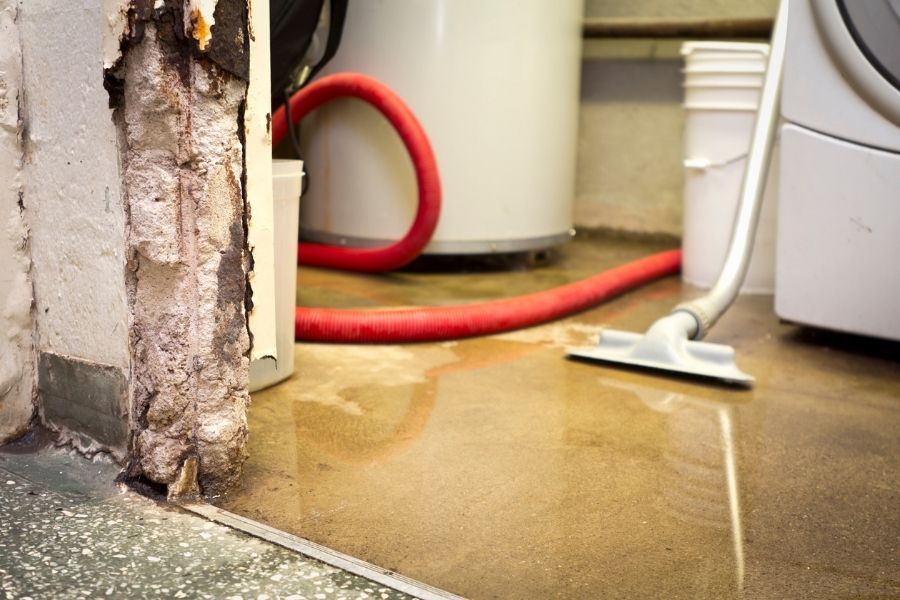
Concrete may appear dry on the surface while holding significant moisture underneath, which is why professional moisture mapping matters.
The Science of Structural Drying
Extraction removes standing water, but moisture absorbed into building materials needs to be drawn out through evaporation and captured through dehumidification.
Air Movement and Dehumidification
Commercial air movers create high-velocity airflow across wet surfaces, accelerating evaporation. According to the EPA's guidance on moisture control, maintaining indoor relative humidity below 60 percent is critical for preventing mold. Professional dehumidifiers maintain conditions well below that threshold.
The 48-Hour Window
24hrs
Mold spores begin germinating
48hrs
Active mold growth starts
72hrs
Mold colonization spreads
Learn more about mold growth timelines in St. Louis humidity.
Why Speed Saves Money
Faster drying means less time for damage to compound. Hardwood floors dried within 24 hours often survive intact. Wait three days, and those same floors require replacement. For homeowners trying to understand why water damage estimates vary between companies, equipment capability is a major factor.
What This Means for Your Home
Professional equipment extracts more water, detects hidden moisture, and dries structures faster. That combination saves building materials, prevents mold, and costs less than the repair bills following inadequate DIY efforts.
When water floods your St. Louis area home, you have a narrow window to act. The equipment used during that window determines everything that follows.
Our team at ABC Environmental Contracting Services brings truck-mounted extractors, commercial dehumidifiers, thermal imaging cameras, and decades of experience to every water emergency. We're veteran-owned, available 24/7, and we understand what St. Louis homeowners face when basements flood or pipes burst during Missouri's unpredictable weather.
The difference between rental equipment and professional-grade systems isn't just about power or speed, though both matter enormously. It's about having the right tools to see what's really happening inside your walls and under your floors. It's about achieving truly dry conditions before mold has a chance to establish itself. When moisture issues do lead to mold growth, professional mold remediation becomes necessary. And it's about protecting your investment in your home.
Frequently Asked Questions
How long does professional water extraction take compared to rental equipment?
Professional truck-mounted extractors remove water at 50 to 100 gallons per minute, while rental equipment handles only 5 to 10 gallons per hour. For a typical flooded basement, professional extraction takes under an hour compared to multiple days with rental equipment.
Can rental equipment effectively dry carpet and padding?
Rental equipment can remove surface water from carpet but lacks the suction power to extract moisture from carpet padding and subfloor materials. Professional weighted extraction tools access moisture that rental equipment cannot reach.
Why do restoration companies use thermal imaging cameras?
Thermal imaging cameras detect temperature differences caused by moisture hidden behind walls and under floors. Water damage that appears dry often registers 40 to 60 percent moisture content on professional meters, well above the 15 percent threshold needed to prevent mold.
How quickly does mold grow after water damage?
Mold spores begin germinating within 24 hours of water exposure and establish active colonies within 48 to 72 hours. Professional equipment achieves dry conditions within this critical window, preventing mold growth.
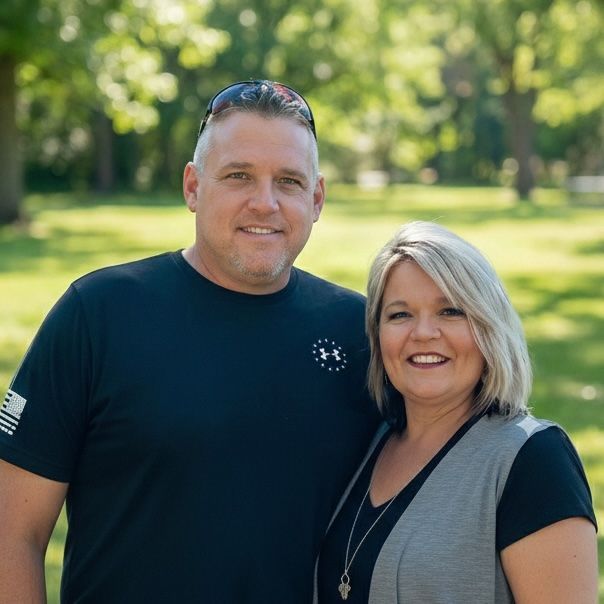
Dan and Tina Benton are the owners of ABC Environmental Contracting Services, a veteran-owned restoration company serving the St. Louis Metro East area. Together, they bring over two decades of expertise in water damage restoration, mold remediation, and asbestos removal for both residential and commercial properties. They're committed to serving their community with integrity and dedication, providing 24/7 emergency response when disaster strikes.