Can You Live in Your Home During Asbestos Abatement Work?
Jump To:
The short answer? It depends. At ABC Environmental Contracting Services, we've helped countless St. Louis area homeowners navigate this exact question during asbestos removal projects. Some families can stay put during abatement work, while others are better off making temporary arrangements elsewhere.
Here's what matters: your safety and your family's health. The decision to stay or go isn't about convenience. It's about understanding how containment works, what risks exist, and what your contractor has planned. Let's walk through what you need to consider.
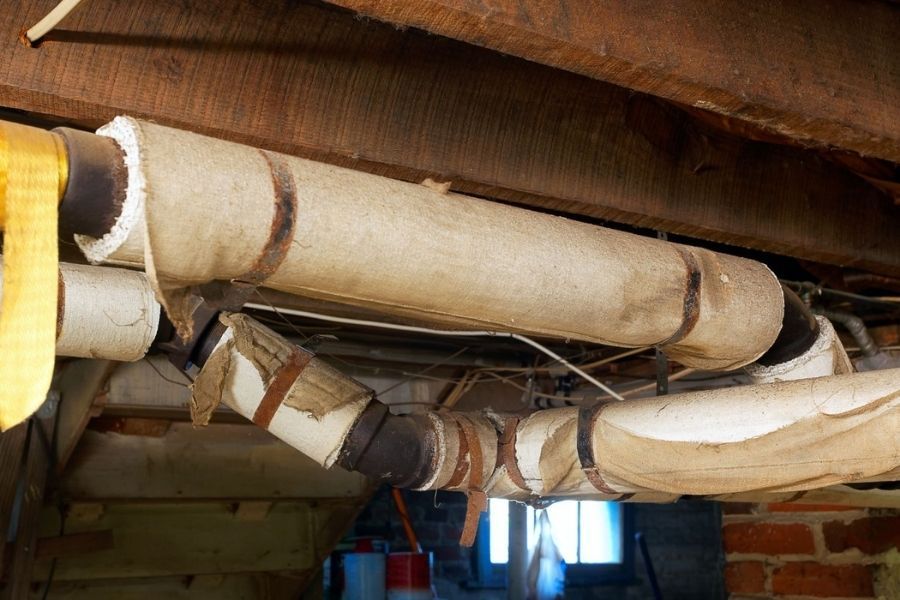
Asbestos insulation on pipes, like what's commonly found in older St. Louis homes, requires professional removal with strict containment.
What Safety Protocols Keep You Protected?
Professional asbestos abatement isn't a casual undertaking. Licensed contractors follow strict EPA regulations and OSHA guidelines that dictate exactly how work must be performed. These protocols exist because disturbed asbestos releases microscopic fibers that can cause serious respiratory diseases when inhaled.
The safety measures your contractor implements will determine whether staying home is even an option. Key protocols include negative air pressure systems, HEPA filtration units, and plastic sheeting that creates airtight barriers between work areas and living spaces.
How Effective Is Professional Containment?
When done correctly, containment barriers are remarkably effective at keeping asbestos fibers inside the work zone. Professional crews use multiple layers of protection to create what's essentially a sealed bubble around the contaminated area.
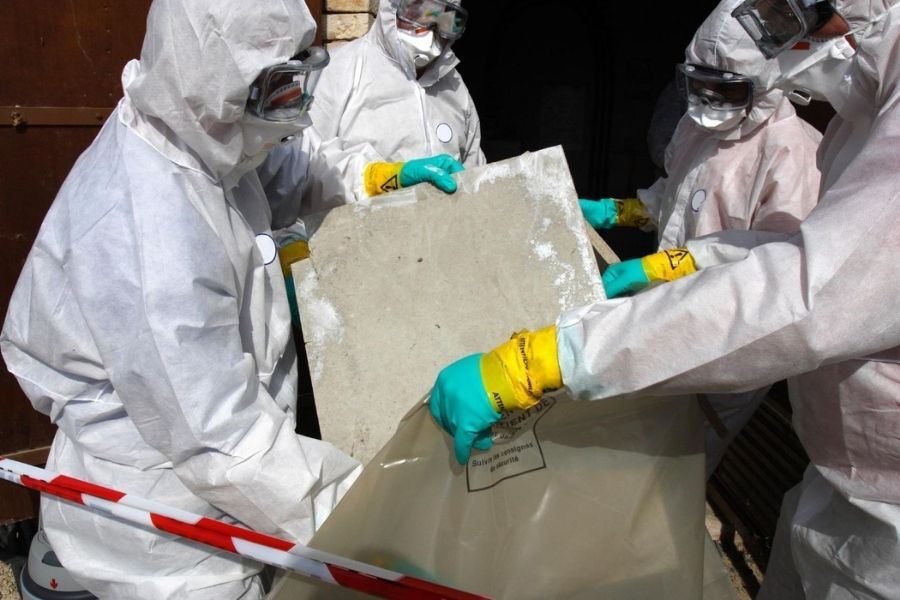
Licensed technicians use full PPE and follow strict protocols during every asbestos removal project.
Containment Methods Used During Abatement:
- Critical barriers using 6-mil polyethylene sheeting
- Negative air machines creating inward airflow
- HEPA filtration capturing particles as small as 0.3 microns
- Decontamination chambers for workers entering and exiting
- Air monitoring to verify containment integrity
Containment effectiveness depends on project scope. A small bathroom ceiling removal is very different from stripping asbestos flooring throughout an entire floor. Location matters too. Basement work typically poses less risk to upper living areas than work performed in central spaces of your home.
Need help determining if your family can stay during abatement?
Our team will assess your situation and give you honest recommendations.
Schedule a ConsultationWhen Should You Leave Your Home?
Some situations make the decision easy. If you have young children, elderly family members, anyone with respiratory conditions, or pets, temporary relocation is usually safer. The same goes for extensive projects lasting more than a few days.
December presents its own challenges. With temperatures dropping and heating systems running constantly, maintaining proper containment becomes more complex. HVAC systems can spread contaminated air if not properly isolated, and furnace pressure can affect containment integrity.
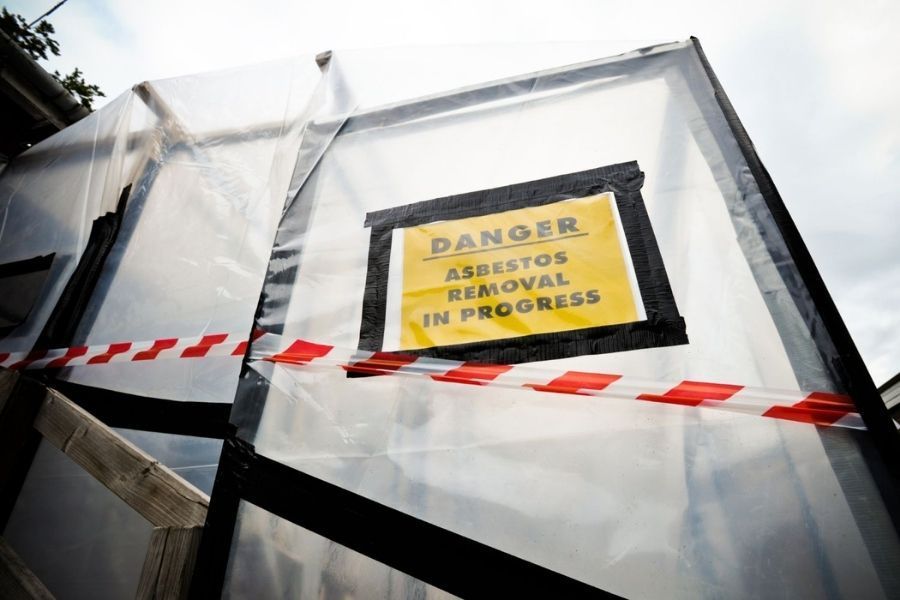
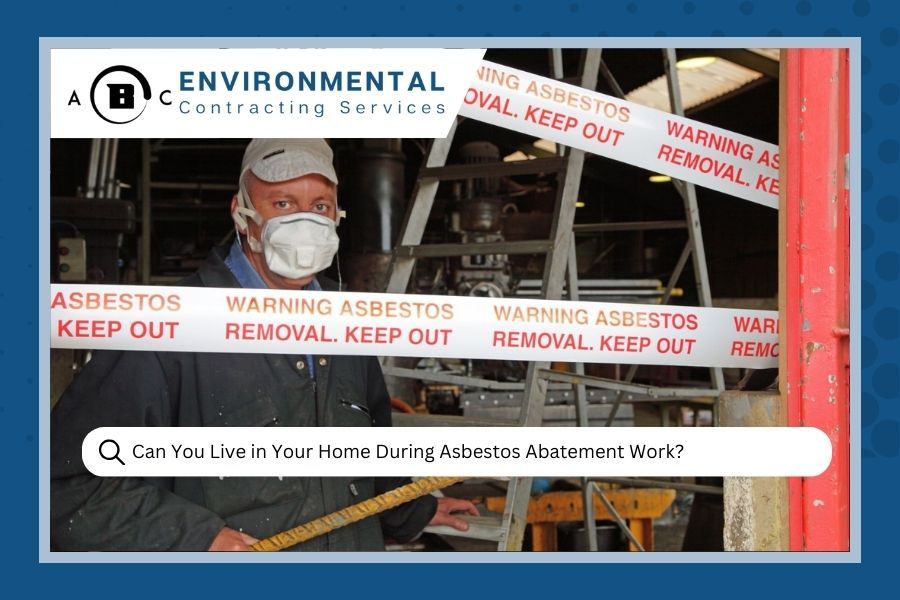
Warning signs and sealed containment zones are required during professional asbestos abatement projects.
Stay vs. Go: Quick Reference Guide
| Scenario | Recommendation |
|---|---|
| Small, isolated area (single room) | May be able to stay |
| Project lasting 3+ days | Consider temporary relocation |
| Young children or elderly residents | Relocate during work |
| Work involves HVAC system components | Relocate during work |
| Multiple rooms or whole floor | Relocate during work |
| Family members with asthma or allergies | Relocate during work |
Planning for Alternative Housing
If leaving is the best option, start planning early. December means hotels book up quickly and family members may have less flexibility to host. Having a plan before abatement begins reduces stress considerably.
Many homeowners don't realize their insurance policy may cover temporary housing during remediation work. It's worth calling your insurance agent before the project starts. For realistic project timelines, check out our guide on what to expect during professional asbestos containment.
Here's a practical checklist for families planning to relocate temporarily:
- Confirm project duration with your contractor in writing
- Contact your homeowner's insurance about temporary housing coverage
- Pack essential medications, documents, and valuables
- Arrange care for pets that cannot come with you
- Plan for re-entry only after clearance testing confirms safe air quality
If you live in a pre-1975 home, our article on where asbestos hides in older homes can help you anticipate project scope.
Why Professional Abatement Matters
Nobody wants to pack up their family during the holidays or spend money on a hotel. But asbestos exposure is a serious health risk, and the consequences of improper removal can follow your family for decades.
At ABC Environmental Contracting Services, we're a veteran-owned company serving St. Louis and the Metro East for over 20 years. We'll give you an honest assessment, not a sales pitch. If you can safely stay home during your project, we'll tell you. If you can't, we'll explain exactly why.
Have questions about an upcoming asbestos project? Contact our team or call us at (314) 668-1509. We're available 24/7.
Frequently Asked Questions
How long does asbestos abatement typically take?
Project timelines vary based on size and complexity. A small bathroom ceiling might take 1 to 2 days, while whole-floor abatement can require a week or more. Your contractor should provide a detailed timeline before work begins.
Can I enter the containment area during the project?
No. Containment areas are off-limits to anyone not wearing proper respiratory protection and protective suits. Entering without PPE exposes you to asbestos fibers and compromises containment for everyone.
What happens if air testing shows contamination outside the work zone?
Work stops immediately. The contractor must identify and fix the breach, clean affected areas using HEPA equipment, and pass new air quality tests before resuming. This is why continuous monitoring matters.
Is it safe to return home the same day abatement ends?
Only after clearance testing confirms air quality meets safety standards. Most projects require 24 to 48 hours between cleanup and testing. Your contractor will provide documentation before you move back in.
Dan and Tina Benton are the owners of ABC Environmental Contracting Services, a veteran-owned restoration company serving the St. Louis Metro East area. Together, they bring over two decades of expertise in water damage restoration, mold remediation, and asbestos removal for both residential and commercial properties. They're committed to serving their community with integrity and dedication, providing 24/7 emergency response when disaster strikes.