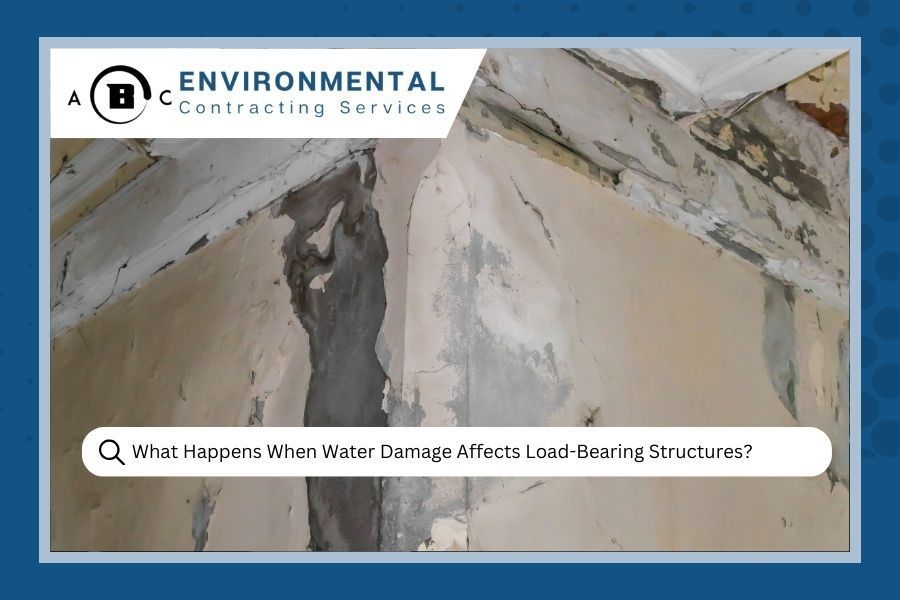
What Happens When Water Damage Affects Load-Bearing Structures?
Jump To:
Most homeowners think about water damage in terms of soggy carpets and ruined drywall. Fair enough. But here's what keeps our team at ABC Environmental Contracting Services up at night: what happens when water reaches the bones of your house? We're talking about professional water damage restoration that goes far beyond surface-level cleanup. Load-bearing structures hold your entire home together, and when they're compromised, everything above them is at risk.
Whether it's a slow leak behind a wall or a sudden burst pipe flood, water can quietly weaken the framing that supports your roof and upper floors. In the St. Louis metro area, where basements are standard and severe weather is a seasonal tradition, this happens more often than people realize.
Why Load-Bearing Walls Are So Vulnerable to Water Damage
Load-bearing walls carry the weight of your home from the roof down through the foundation. Weaken one with water, and you've got a slow-motion version of the same problem as removing one entirely.
Wood framing is the most common material in residential load-bearing walls, and wood absorbs water like a sponge. Once moisture penetrates studs, joists, and headers, the wood swells, warps, and eventually rots. According to the IICRC S500 Standard for water damage restoration, moisture that isn't addressed within 24 to 48 hours can cause secondary damage, including microbial growth and material degradation that directly impacts structural integrity.
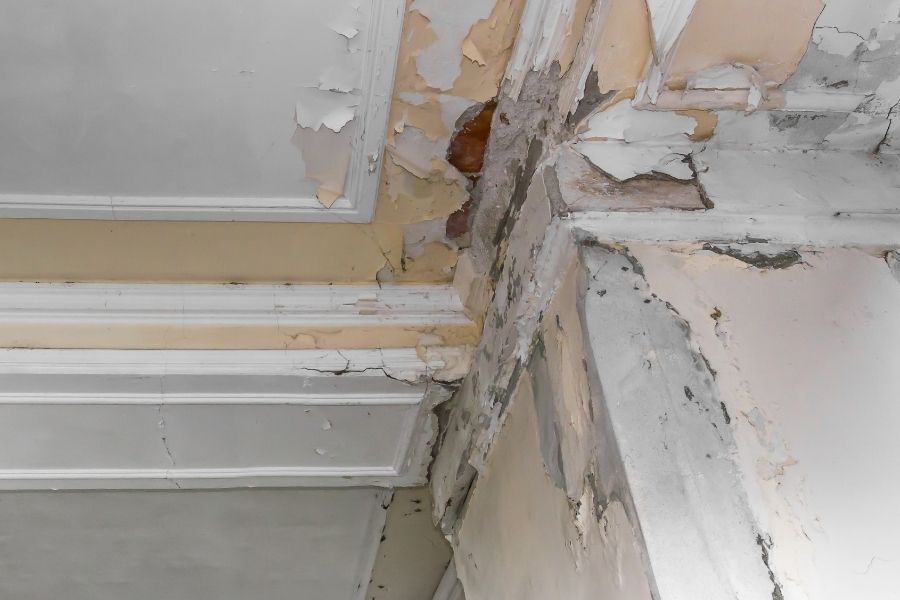
Prolonged moisture exposure weakens the wood framing inside load-bearing walls, leading to warping, swelling, and eventual rot.
Steel beams fare better, but prolonged moisture still leads to corrosion at joints and connection points. Concrete foundations can crack and spall when trapped water expands during freeze-thaw cycles, something St. Louis homeowners deal with every winter.
Warning Signs That Water Is Affecting Your Home's Structure
Structural water damage doesn't always announce itself with a dramatic flood. Sometimes it whispers.
Visible Indicators You Shouldn't Ignore
- Diagonal cracks in drywall near door frames and windows, appearing suddenly
- Doors and windows that stick or won't close, signaling shifting in the framing
- Sagging or uneven floors, especially on upper levels where joist damage may be hiding
- Bulging or bowing walls indicating swelling behind the surface
- Recurring water stains that reappear after cleaning, suggesting an active moisture source
- Musty odors from walls or floors, often the first sign that mold is growing inside the structure
A crack here and a sticky door there might seem minor individually. Together, they could be telling you something important about what's happening inside your walls.
Worried About Water Damage in Your Home's Structure?
Our team responds 24/7 across the St. Louis metro area. Don't wait for small signs to become big problems.
Get a Free AssessmentHow a Structural Assessment Works After Water Damage
A structural assessment is the first real step toward understanding how deep the damage goes. It's a systematic evaluation of your home's load-bearing components to determine what's compromised and what's still solid.
What Happens During the Assessment
A qualified restoration team starts with moisture mapping, using thermal imaging and commercial-grade moisture meters to trace where water has traveled. Water doesn't just sit where it landed. It follows gravity, wicks through wood, and pools in unexpected places.
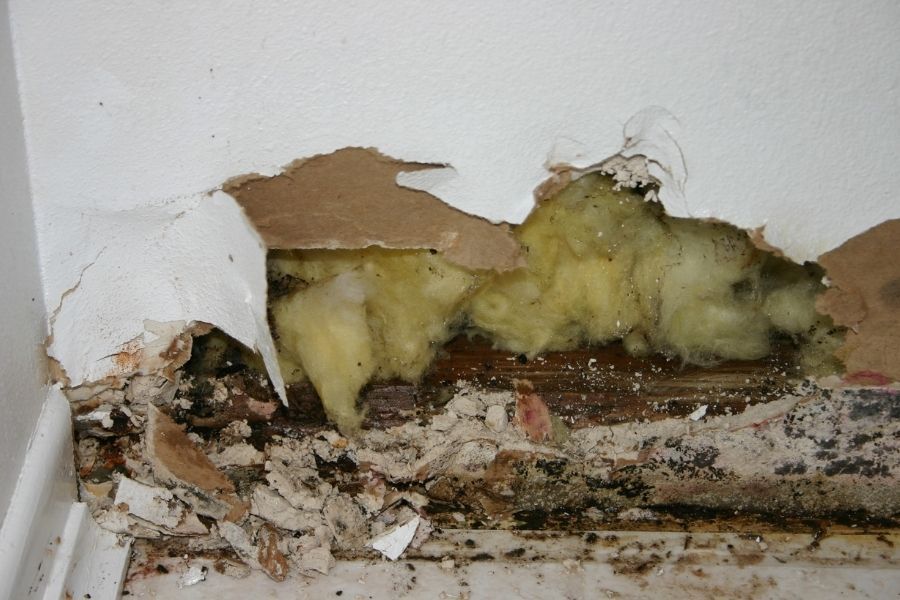
Removing wet insulation reveals the true condition of load-bearing framing, a critical step in any structural assessment.
Then the team evaluates material condition: checking framing for rot, testing connections, and identifying shifting or settling. Often, drywall, insulation, or flooring must be removed to see what's underneath. Think of it like a doctor ordering an X-ray.
🔍 Structural Assessment Checklist
| Assessment Step | What It Reveals |
|---|---|
| Thermal imaging scan | Hidden moisture behind walls and ceilings |
| Moisture meter readings | Exact moisture levels in framing materials |
| Visual framing inspection | Rot, warping, and connection point failure |
| Foundation evaluation | Cracking, spalling, and settling patterns |
| Load path analysis | Whether weight transfers properly through the structure |
When You Need a Structural Engineer
Not every water damage situation requires a structural engineer, but when load-bearing components are involved, you'll likely need one. Restoration companies handle water removal, drying, and rebuilding. Engineers determine whether the building is safe and what repairs restore its original load capacity.
You'll typically need an engineer when damage affects primary support beams, long-span floor joists, foundation walls, or framing exposed to water for extended periods. If your basement experienced significant flooding, engineering review becomes critical because foundation walls are almost always load-bearing.
The engineer provides a formal report documenting damage, specifying repairs, and sometimes designing temporary shoring systems. That report also becomes valuable documentation for insurance claims.
Safety Considerations You Can't Afford to Skip
When water damage reaches structural components, safety stops being optional. This isn't a weekend DIY project.
Immediate Hazards
Weakened load-bearing walls can shift weight unexpectedly. Ceilings can sag, floors can give way, and walls can bow under loads they once carried easily. FEMA recommends that homeowners avoid entering structures with suspected flood damage until a professional confirms it's safe.
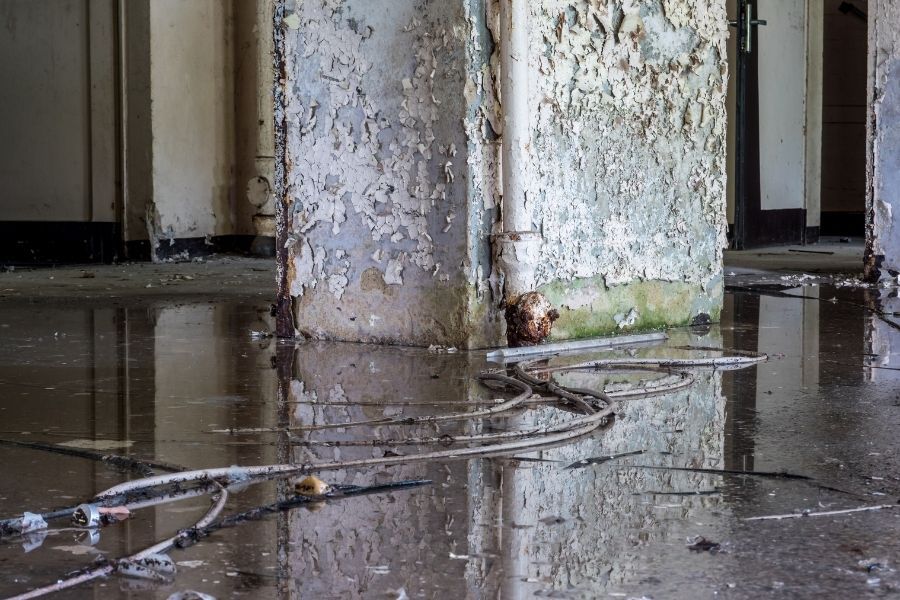
Visible surface deterioration is a clear indicator that structural integrity may be compromised beneath.
Electrical systems in water-damaged walls create shock and fire risks. Plumbing connections can loosen as framing shifts. And if your home was built before the mid-1980s, wet structural work could disturb asbestos-containing materials. Our team handles asbestos removal alongside water damage restoration because those situations overlap more often than you'd expect.
What NOT to Do
Don't remove wet drywall from load-bearing walls without knowing what's behind it. Don't use temporary supports without engineering guidance. And don't assume the structure is fine because it hasn't collapsed. Structural failure from water damage is gradual, not sudden.
The Restoration Process for Load-Bearing Water Damage
Restoring structural water damage involves a staged approach. You can't rush it, and you can't skip steps.
Step-by-Step Restoration
- Emergency water extraction to stop ongoing damage and reduce moisture levels
- Controlled demolition of wet drywall, insulation, and flooring to expose framing
- Structural assessment and engineering review to document damage and determine repairs
- Temporary shoring to stabilize the structure during restoration
- Professional drying with commercial dehumidifiers until framing moisture hits acceptable levels
- Mold prevention treatment because wet framing attracts mold growth fast, especially in humid conditions
- Structural repair or replacement of compromised members per engineering specs
- Rebuild and finishing to return the home to pre-damage condition
Timelines vary by damage extent. A single wall section might take two to three weeks from extraction to rebuild. More extensive damage involving multiple load-bearing points or mold remediation can stretch to several weeks.
Don't Gamble With Your Home's Structural Safety
ABC Environmental Contracting Services provides 24/7 emergency response across greater St. Louis. Veteran-owned, over 20 years of combined experience.
Contact Our Team TodayWant to see this in practice? Our case study on restoring a St. Louis basement after a burst pipe walks through a real project start to finish.
Frequently Asked Questions
How can I tell if a water-damaged wall in my home is load-bearing?
Load-bearing walls typically run perpendicular to floor joists and sit above basement beams or foundation walls. Determining this requires professional evaluation, so never remove or alter a suspected load-bearing wall without an engineer's guidance.
How long does it take for water to cause structural damage to load-bearing framing?
Wood framing absorbs water and swells within hours. Visible warping can develop in one to two weeks of sustained moisture. In St. Louis humidity, mold can colonize wet framing within 48 hours, accelerating breakdown further.
Will my homeowner's insurance cover structural water damage repairs?
Most policies cover sudden, accidental water damage from events like burst pipes. Long-term leaks and external flooding without separate coverage are typically excluded. An engineer's report strengthens your claim significantly.
Can water-damaged load-bearing studs be dried and reused, or do they always need replacement?
If caught early and dried below 19% moisture content with professional equipment, many studs can be saved. Once rot takes hold, replacement is the only safe option. A professional inspection determines which members are salvageable.
Dan and Tina Benton are the owners of ABC Environmental Contracting Services, a veteran-owned restoration company serving the St. Louis Metro East area. Together, they bring over two decades of expertise in water damage restoration, mold remediation, and asbestos removal for both residential and commercial properties. They're committed to serving their community with integrity and dedication, providing 24/7 emergency response when disaster strikes.