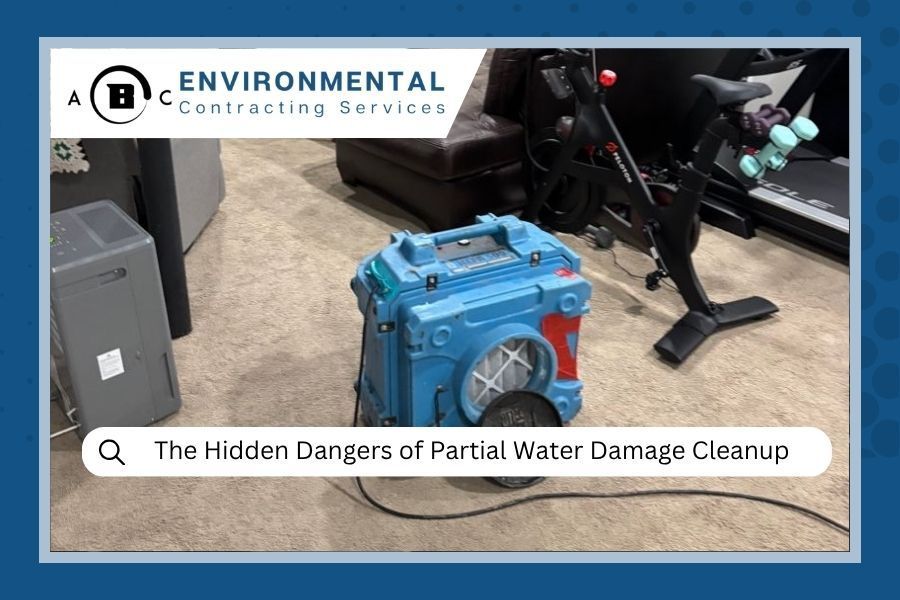
The Hidden Dangers of Partial Water Damage Cleanup
Jump To:
You cleaned up the water. The fans ran for a couple days. Everything looks dry. So why does your house still smell off three weeks later?
Partial water damage cleanup is one of the most common problems our team at ABC Environmental Contracting Services sees in the St. Louis metro. Homeowners take care of what they can see, but the real damage keeps going behind walls and under floors.
Here's what happens when the visible mess gets cleaned up but the job isn't actually finished.
What Counts as Partial Water Damage Cleanup?
Partial cleanup means you got rid of the standing water but didn't fully dry what soaked in deeper. There's a big gap between mopping the floor and drying out the wall cavities, subfloor, and insulation behind what you can see.
Water doesn't just sit where you can see it. It wicks upward through wood framing and seeps between tile and subfloor. It fills up insulation inside your walls.
Cleaning up what you can reach only takes care of a small part of the problem.
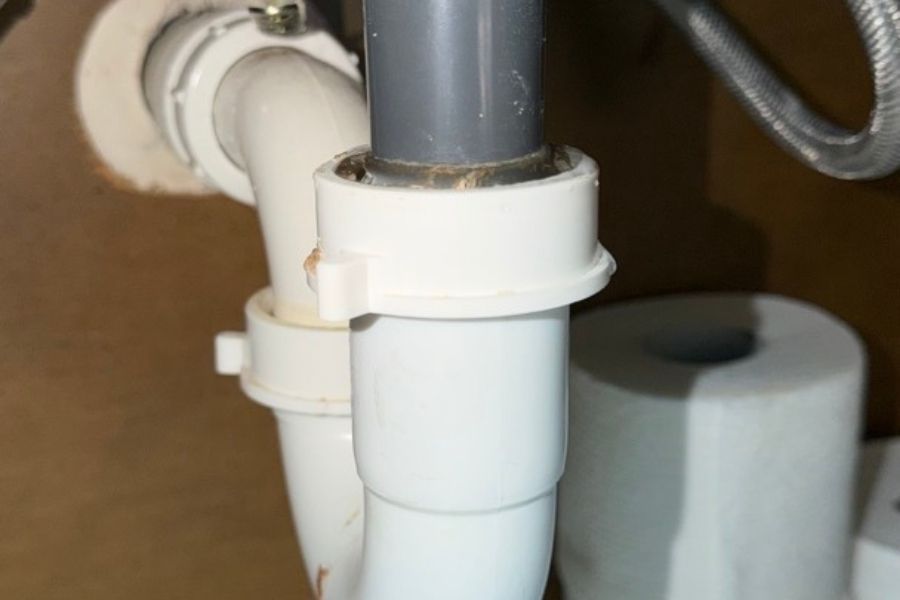
A slow leak under a sink can push moisture into areas you'd never think to check.
5 Hidden Dangers of Incomplete Water Damage Cleanup
1. Mold Growth Behind Walls and Under Flooring
Mold can start growing within 24 to 48 hours of water exposure. Not a scare tactic. That's just the biology of how mold works.
Spores already live in most homes. They only need moisture and something organic, like drywall paper or wood, to start spreading.
The EPA's guide to household mold says it clearly: the key to stopping mold is controlling moisture.
When you dry the surface but skip the cavity behind it, you're giving mold exactly what it needs to grow. Our IICRC-certified techs regularly find active mold behind baseboards and inside walls, even in homes where the owner thought everything was dry weeks ago.
2. Structural Weakening You Can't See
Wood framing soaks up water fast. Here's the thing most people miss: wet wood can weaken without showing any visible damage on the surface. Moisture slowly breaks down the fibers in lumber, leaving it soft and spongy.
Subflooring can warp. Floor joists can start to rot. And none of this may be visible from inside the room.
This kind of damage doesn't show up right away. But once rot starts, repair costs go up fast. What could've been a simple drying job turns into a full structural repair project.
3. Trapped Moisture Under Hard Flooring
Tile, laminate, and vinyl act like a lid on top of your subfloor. Water gets under these surfaces and has nowhere to go. The subfloor stays wet for weeks, sometimes months, because there's no air reaching it.
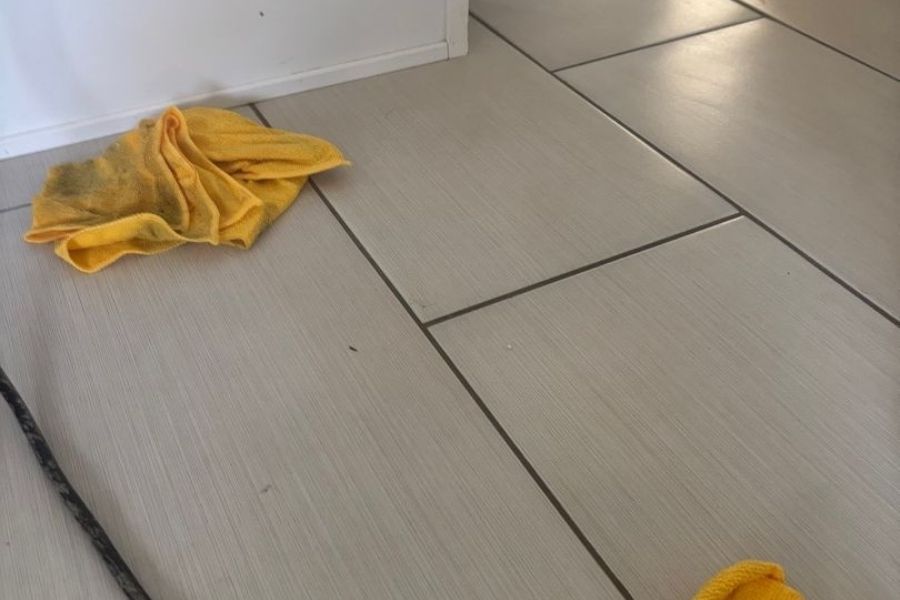
Tile floors can look perfectly fine on top while hiding saturated subfloor underneath.
Restoration pros use moisture meters and thermal cameras to check what's going on below the surface. Without those tools, you're just guessing. And guessing with water damage usually means missing something big.
4. Bacterial Growth and Health Risks
Even clean water from a burst pipe starts getting dirty within 48 to 72 hours. It picks up bacteria from dust, debris, and building materials as it sits. The IICRC S500 standard sorts water into three types based on how dirty it is. Clean water can turn grey or black if nobody deals with it.
Incomplete drying creates a breeding ground for bacteria that can hurt indoor air quality and your family's health. That's another reason professional mold remediation often follows water damage that wasn't fully dried.
5. Insurance Complications Down the Road
Here's one that catches people off guard. If you clean up water damage on your own and problems pop up later, your insurance company may say the new damage came from a bad cleanup, not the original event. That denial can get costly.
Professional documentation, moisture readings, and drying logs create a paper trail that protects your claim.
Not Sure if Your Home Is Fully Dry?
We offer free moisture inspections so you know exactly what's going on behind your walls.
Schedule a Free InspectionHidden Moisture Pocket Checklist: Where Water Hides After a Cleanup
Even if everything looks dry, water can still be hiding in these common areas. Here's what our team checks during every post-damage inspection:
| Location | Why It's a Problem | Detection Method |
|---|---|---|
| Behind baseboards | Drywall wicks moisture upward from the floor | Moisture meter readings |
| Under tile or vinyl flooring | No airflow creates a moisture trap | Thermal imaging camera |
| Inside wall cavities | Insulation holds water like a sponge | Invasive moisture probe |
| Cabinet toe kicks | Dark, enclosed spaces with no ventilation | Visual inspection + meter |
| Crawl spaces | Gravity pulls water down, humidity stays high | Hygrometer + visual |
| HVAC ductwork | Spreads moisture and mold spores throughout home | Duct inspection camera |
When DIY Drying Isn't Enough
Small spills on hard surfaces? Towels and a fan will do. That's not what we're talking about here. If water touched your drywall, carpet, insulation, or subfloor, you're past the point where box fans and open windows can fix it.
Professional structural drying uses heavy-duty dehumidifiers, air movers, and monitoring tools to pull moisture out of materials that home equipment can't reach. We take daily moisture readings and don't call a project done until every area hits safe levels.
A good rule of thumb: if you can see where the water went but can't check whether it's gone, it's time to call someone. Our team at ABC Environmental Contracting Services has over 20 years of combined experience and IICRC water damage certifications. We know where to look.
Want to learn more? Read our post on spotting signs of water damage, or check out our tips for stopping repeat water problems.
Worried About Hidden Moisture in Your Home?
ABC Environmental Contracting Services provides 24/7 emergency water damage response across the St. Louis metro area. Contact our team for a free estimate.
Call us:(314) 668-1509
Frequently Asked Questions
How long does trapped moisture take to cause mold growth?
Mold can start growing within 24 to 48 hours if moisture stays high. Hidden wet spots behind walls or under floors often stay damp long enough for mold to take hold before you ever notice a problem.
Can I use a regular fan to dry out water damage?
A fan helps dry surface water on hard floors, but it can't pull moisture out of drywall, subfloor, or insulation. You need pro-grade drying gear, like big dehumidifiers and air movers, to reach the water trapped inside building materials.
What tools do pros use to find hidden moisture?
Restoration teams use moisture meters, thermal imaging cameras, and humidity gauges to find water you can't see. These tools read moisture levels inside walls, under floors, and in other hidden spots around your home.
Will my insurance cover damage from a bad water cleanup?
It depends. Most policies cover the original water event, but your insurer may deny claims for later damage if they think the first cleanup wasn't done right. Having pro documentation, moisture logs, and drying records from a certified company helps protect your claim.
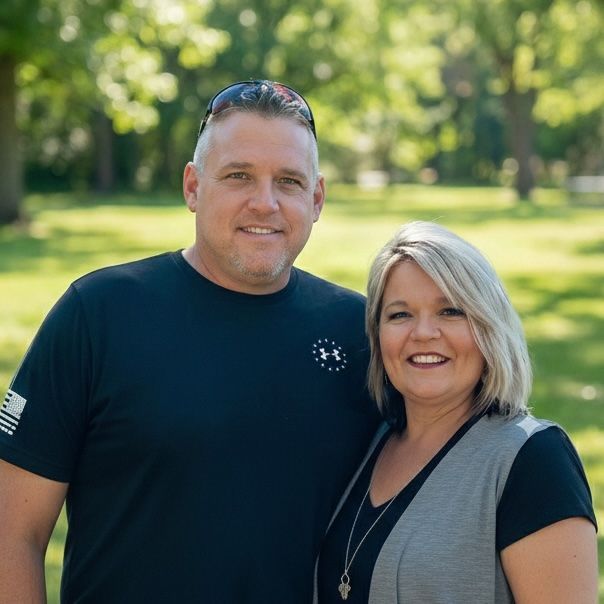
Dan and Tina Benton are the owners of ABC Environmental Contracting Services, a veteran-owned restoration company serving the St. Louis Metro East area. Together, they bring over two decades of expertise in water damage restoration, mold remediation, and asbestos removal for both residential and commercial properties. They're committed to serving their community with integrity and dedication, providing 24/7 emergency response when disaster strikes.