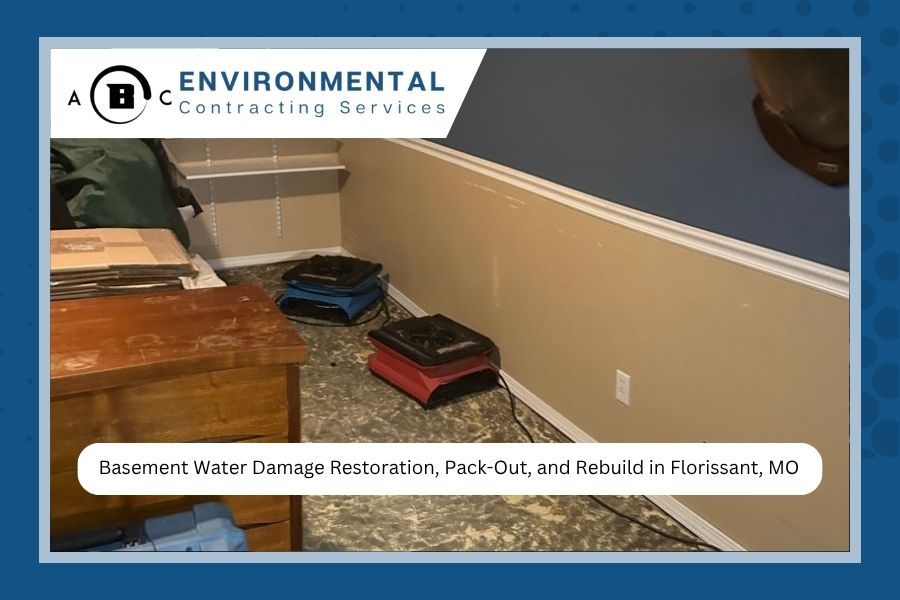
Basement Water Damage Restoration, Pack-Out, and Rebuild in Florissant, MO
When a Florissant homeowner called us about standing water in their finished basement, our team at ABC Environmental Contracting Services responded the same day. This basement water damage restoration project covered the full scope of what we do: water extraction, structural drying, a complete contents pack-out, controlled demolition, and preparation for a full rebuild. It's the kind of job that shows why having one team handle everything from start to finish makes a real difference.
What Happened to This Florissant Basement?
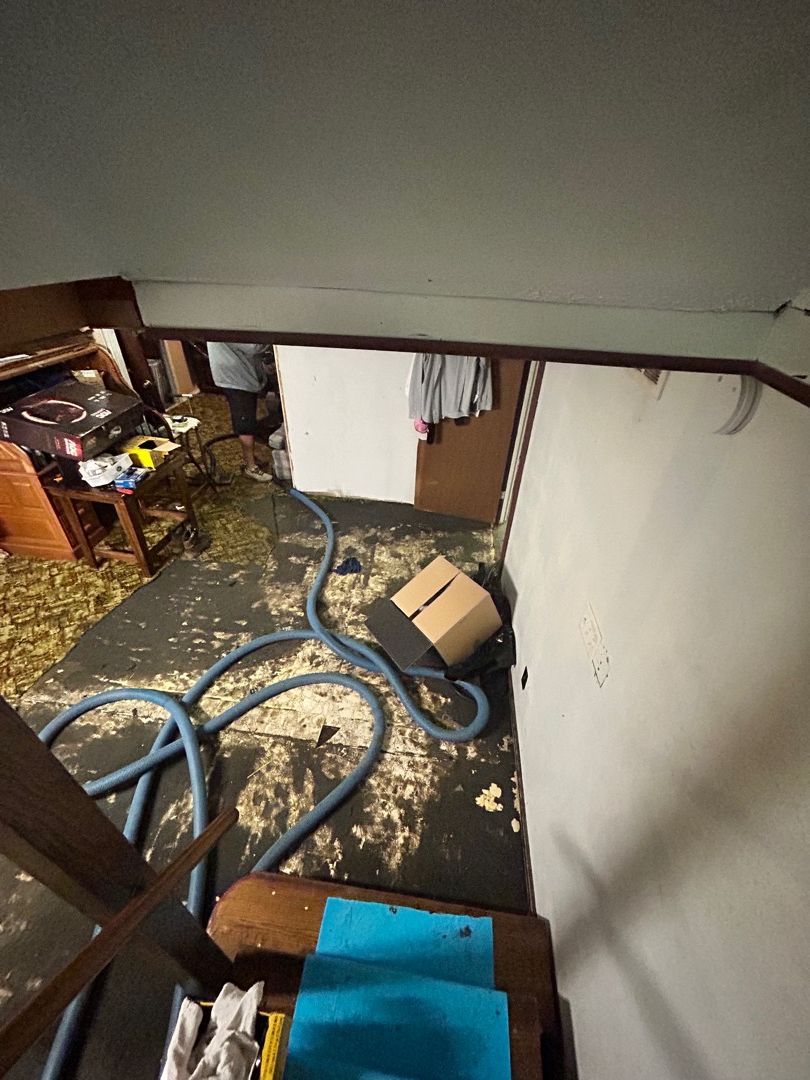
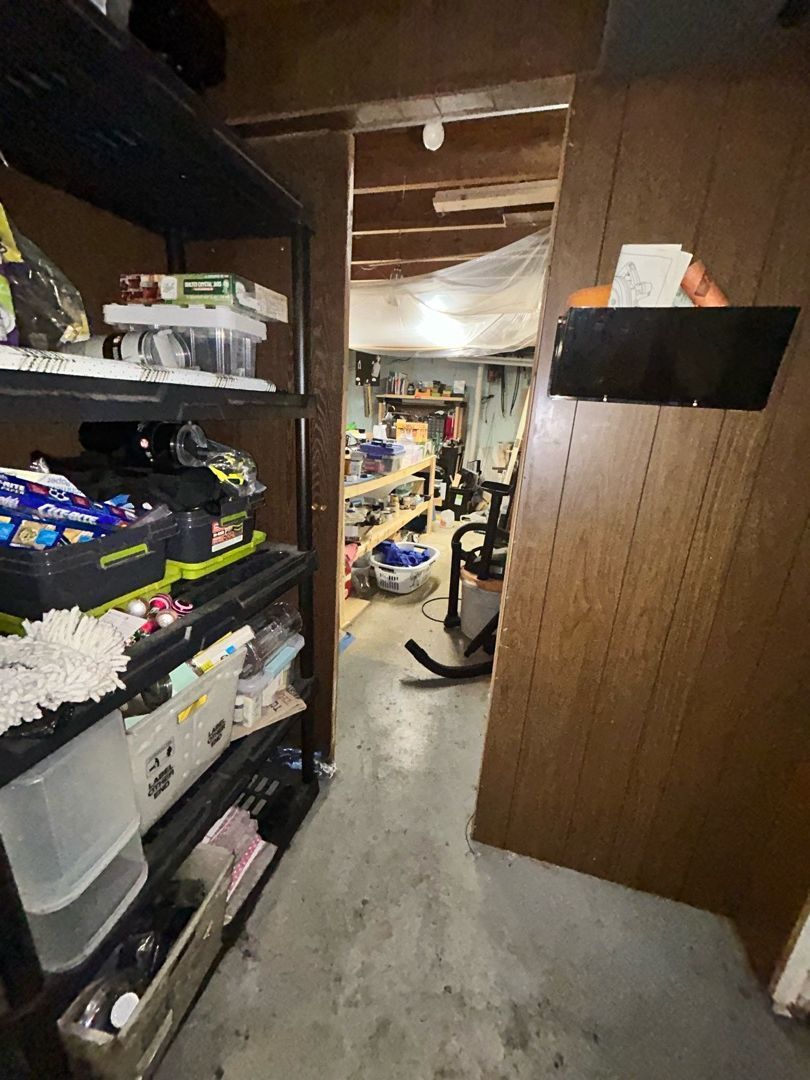
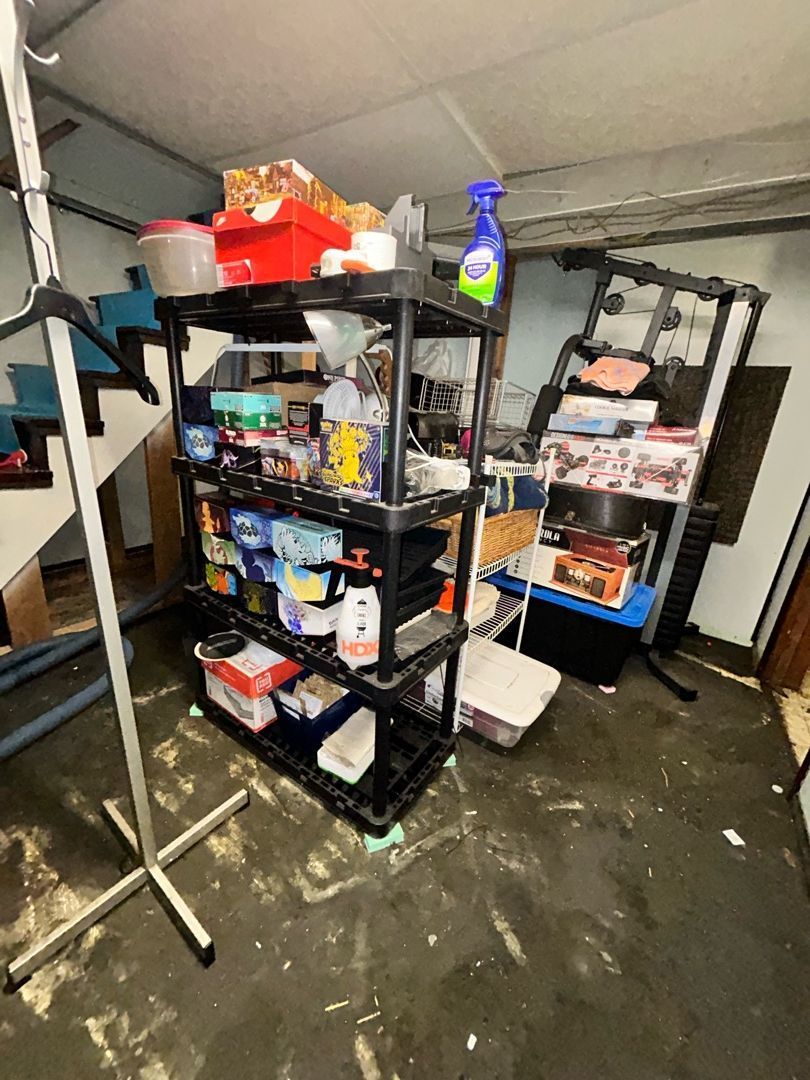
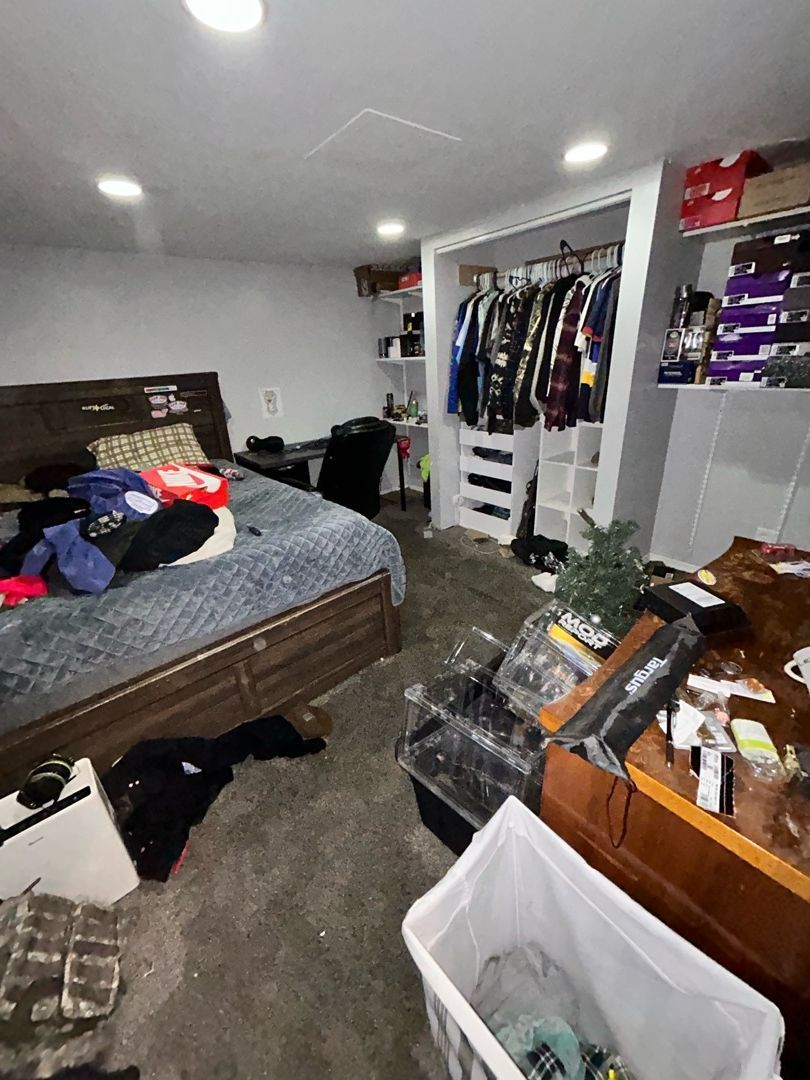
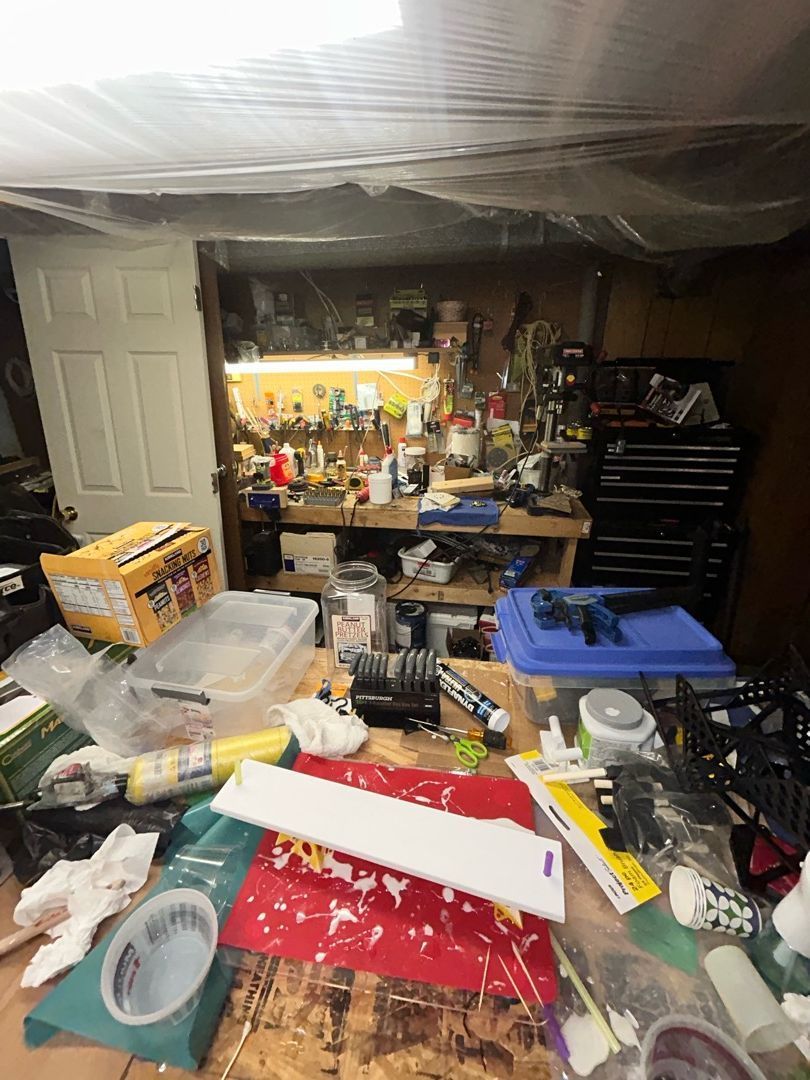
The homeowner discovered their entire finished basement flooded. Water had spread across every room, soaking carpet, drywall, furniture, and personal belongings. This was a fully finished space with multiple rooms, a workshop area, a bedroom, and a living area. The family had years of belongings stored down there, from a home gym to shelving units full of household items.
Situations like this are stressful. You walk downstairs and suddenly everything you own is sitting in water. That feeling of "where do I even start?" is something we hear all the time. The answer is: you don't have to figure it out alone.
How Did the Water Extraction and Drying Process Work?
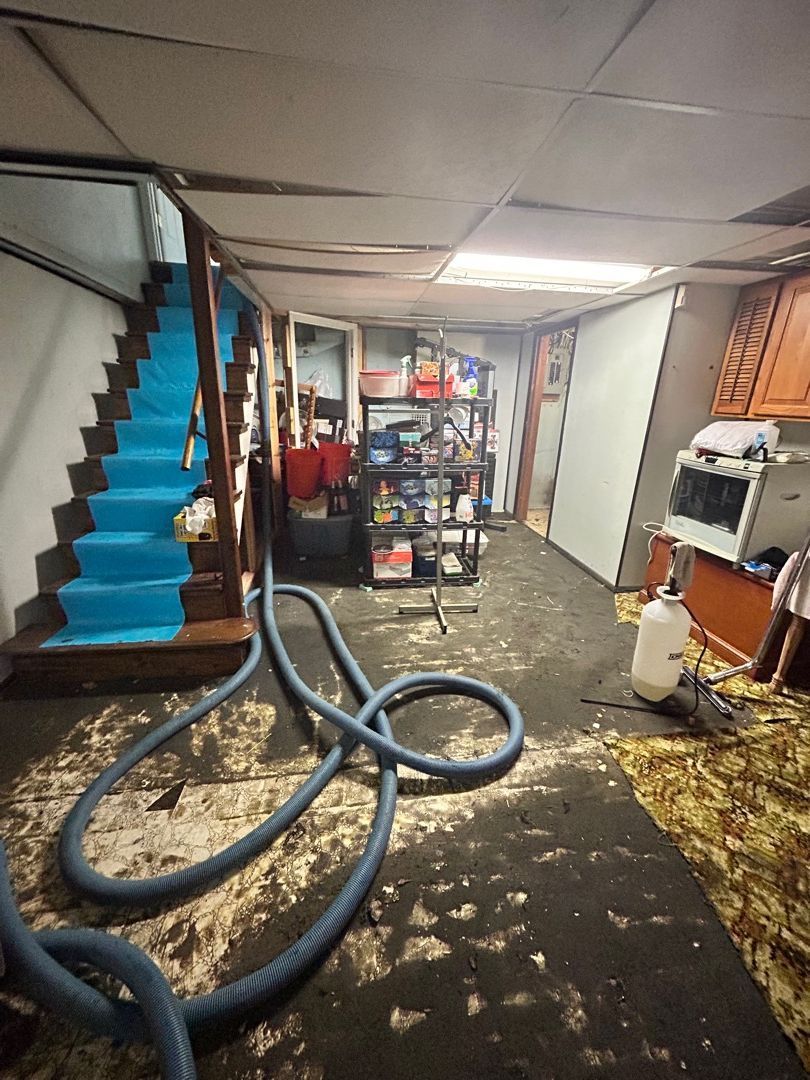
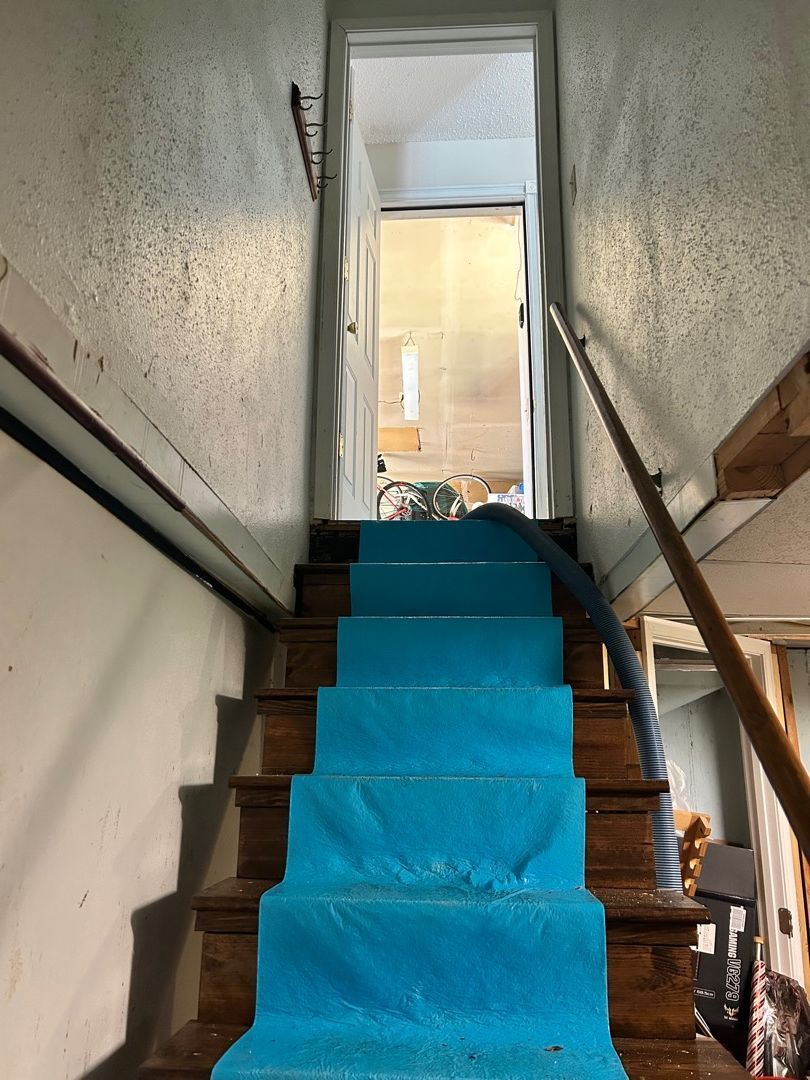
Our crew started by running truck-mounted extraction equipment through the basement. We ran large-diameter hoses from the truck down the stairwell and systematically pulled standing water from every room. Blue protective covering went down on the stairs right away to prevent tracking damage to the rest of the house.
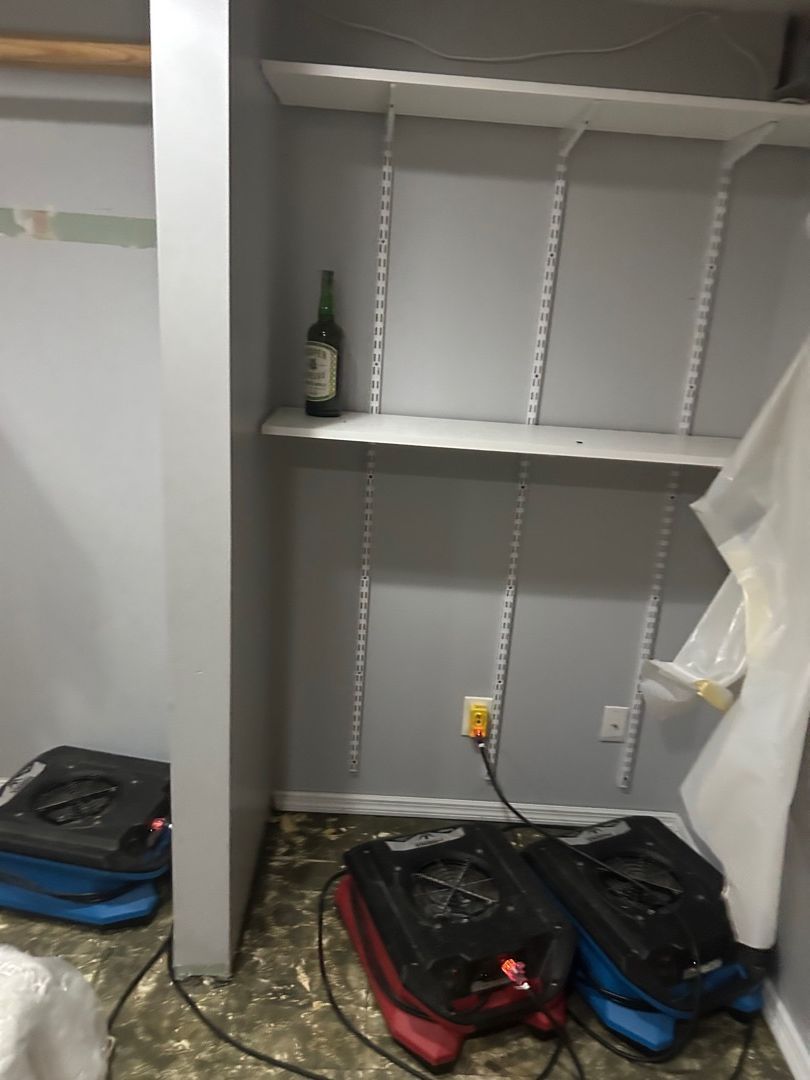
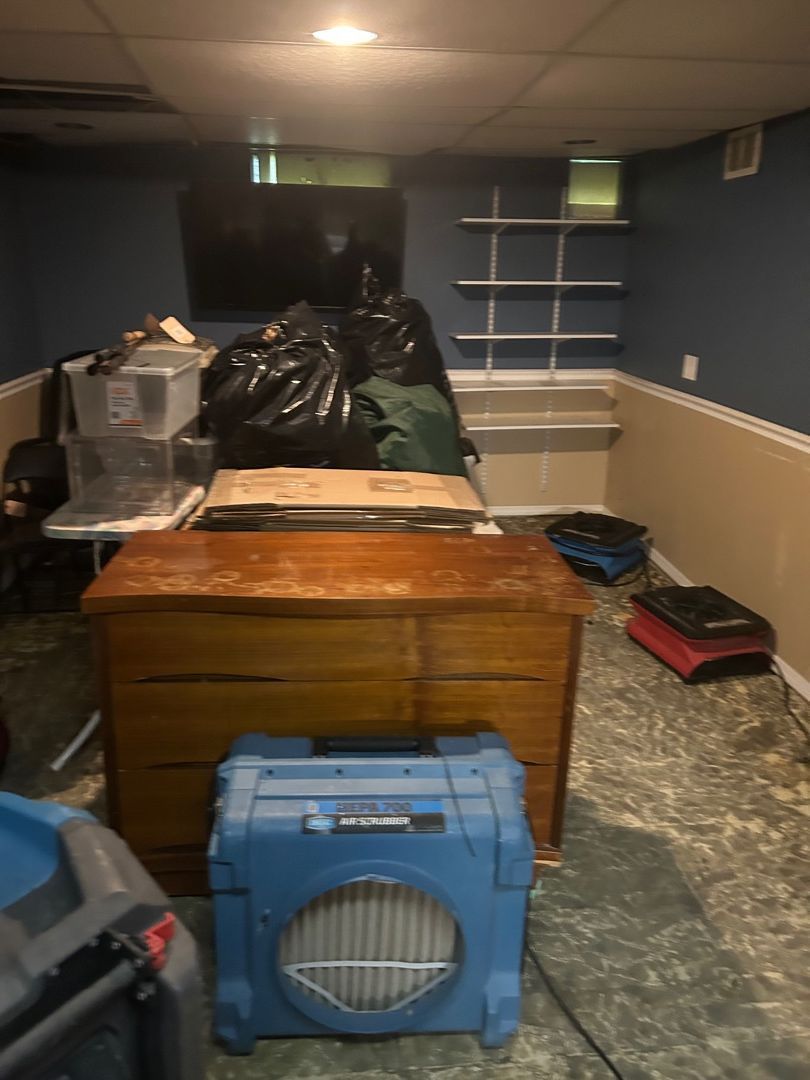
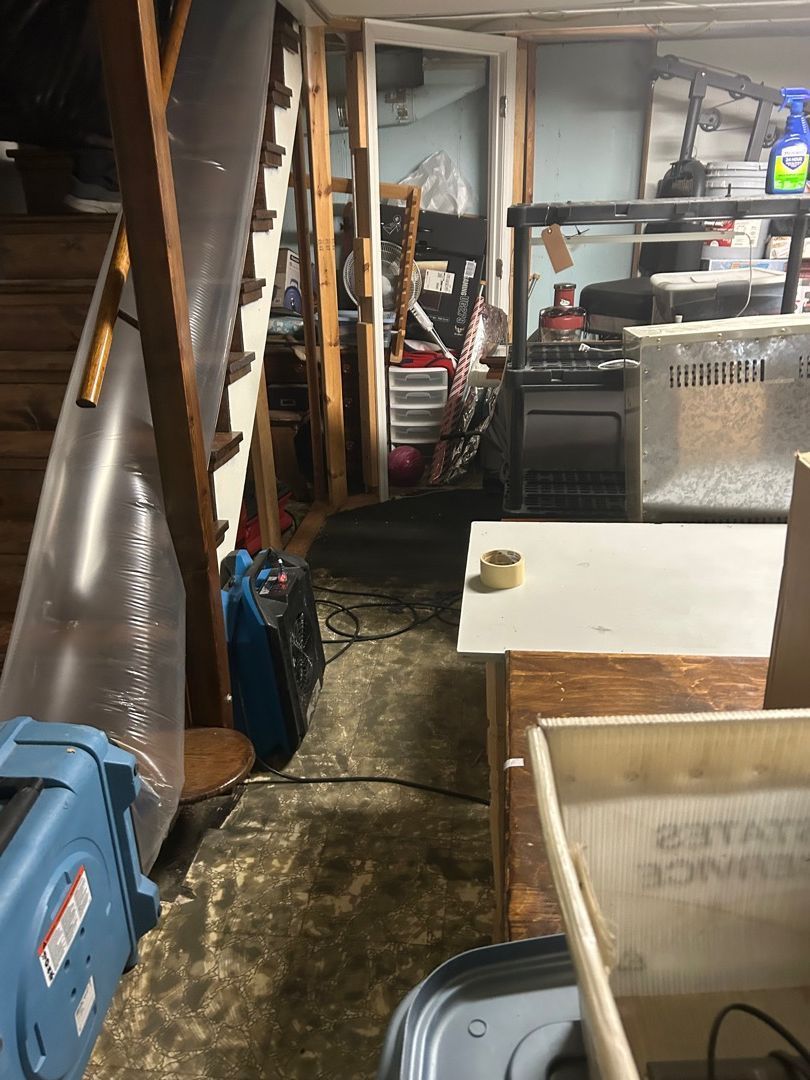
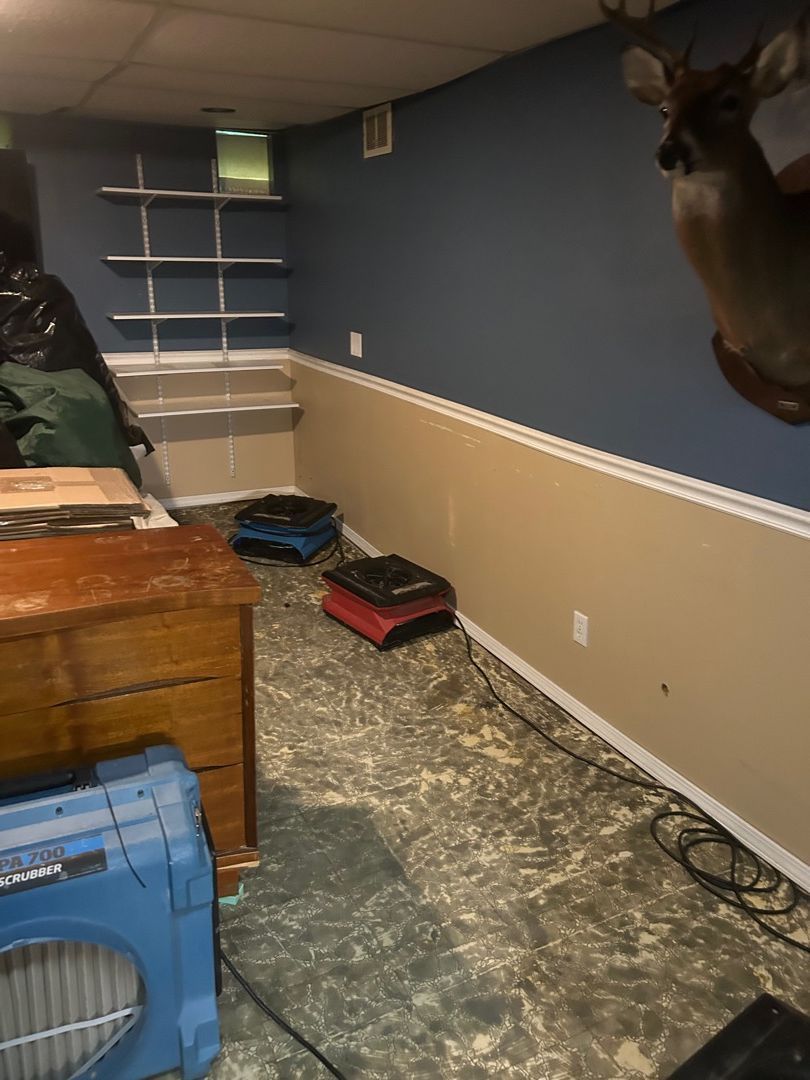
Once the bulk water was out, we placed commercial air movers along the baseboards and in closet spaces. Dehumidifiers ran around the clock to pull moisture from the air. We also brought in HEPA 700 air scrubbers to maintain indoor air quality throughout the drying process. According to the IICRC S500 standard for water damage restoration, professional structural drying should begin within hours of the initial water event to prevent secondary damage like mold growth.
 |
 |
 |
 |
 |
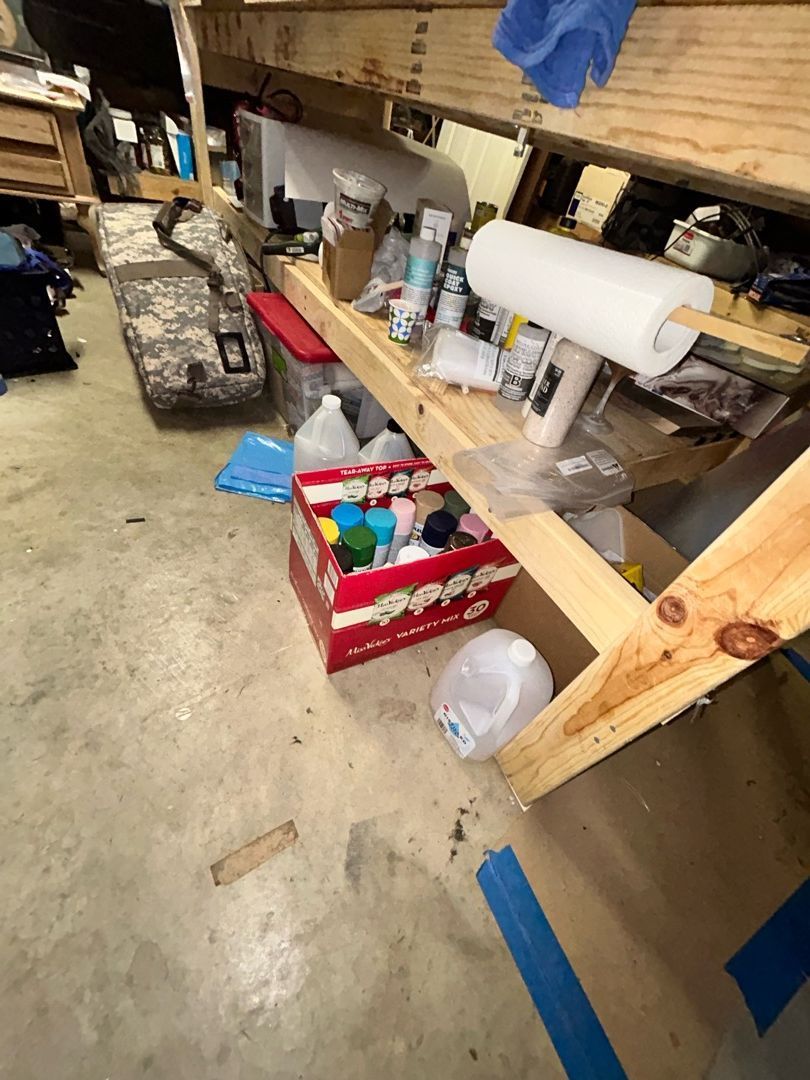 |
Containment sheeting went up across the ceiling in the workshop area to isolate sections of the basement during drying. This keeps moisture, dust, and airborne particles contained while our equipment does its job. It also protects unaffected areas of the home above.
Why Was a Full Pack-Out Necessary?
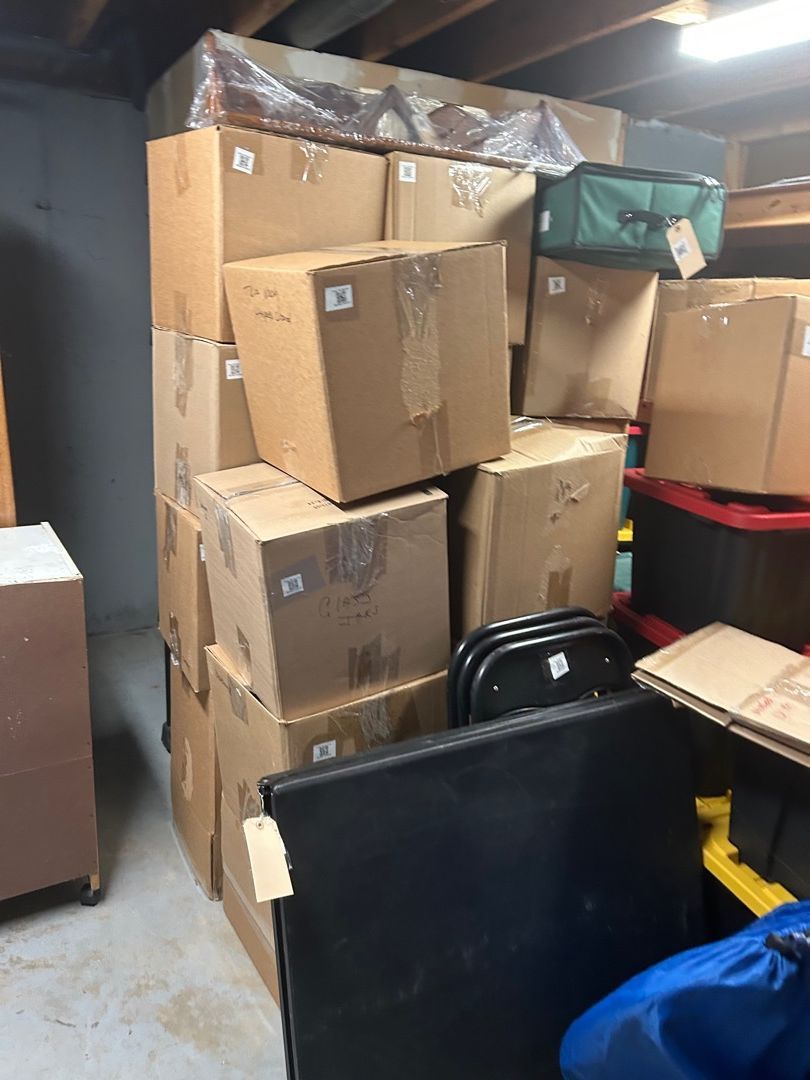
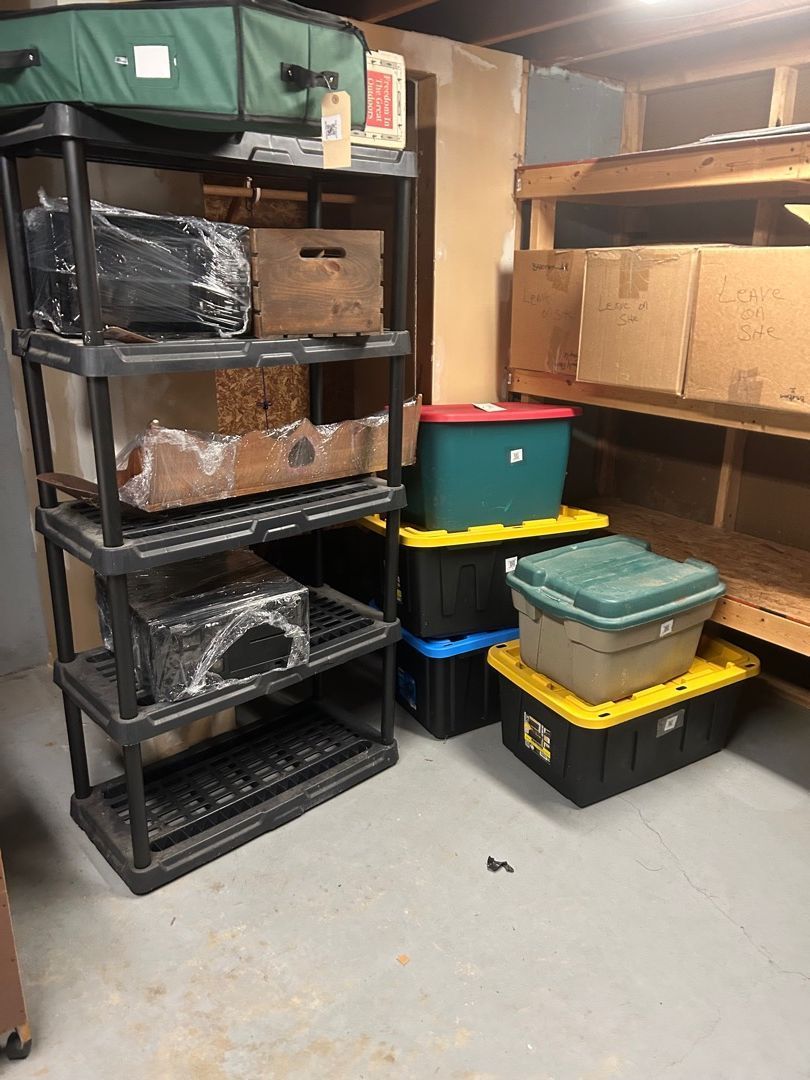
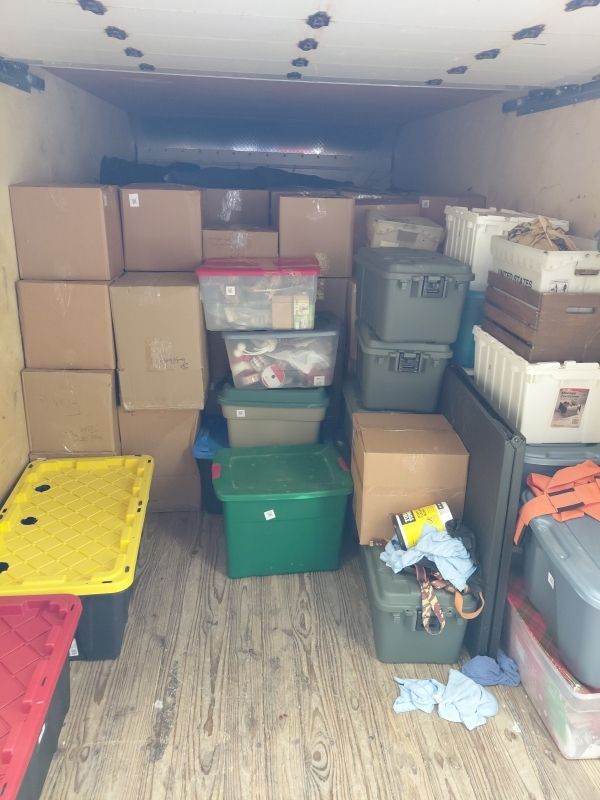
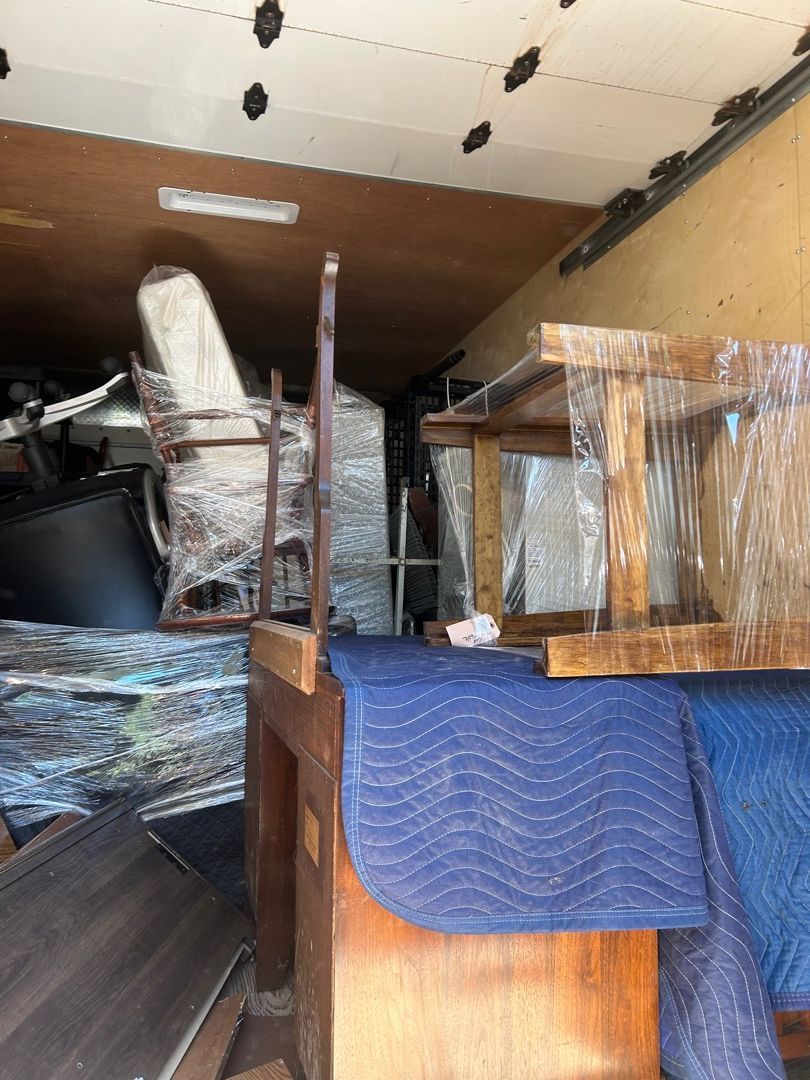
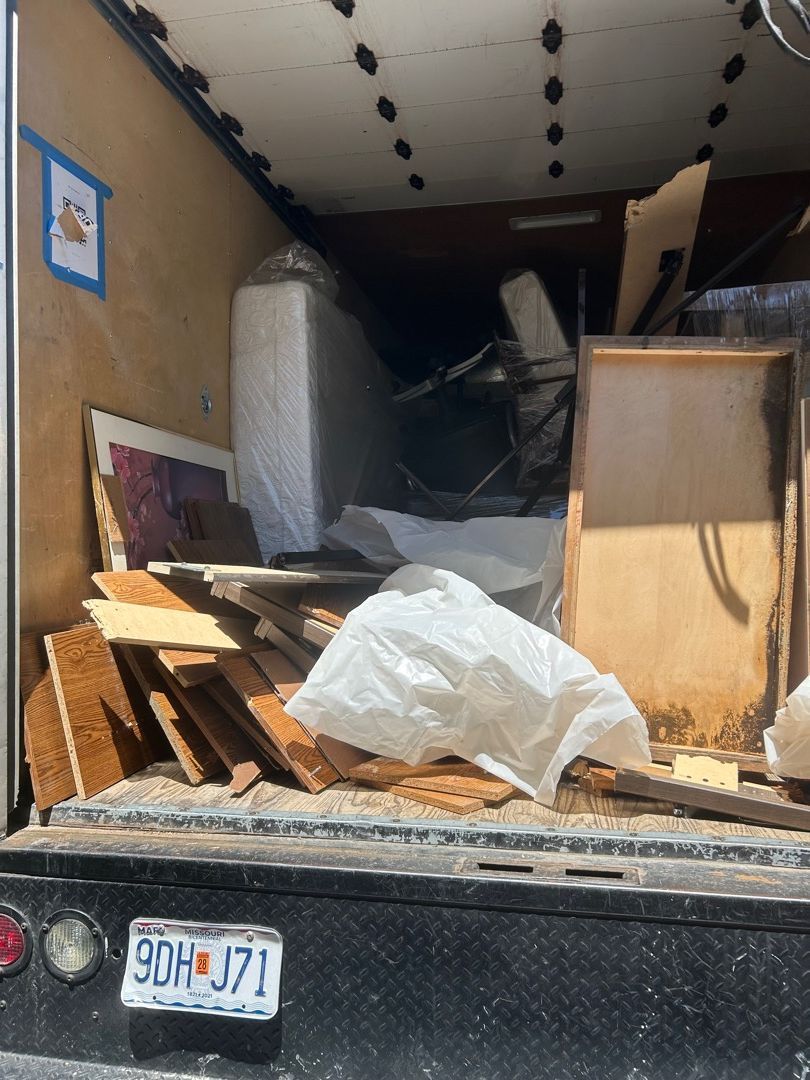
With water affecting every room, there was no dry corner to stage belongings. That meant a full contents pack-out was the right call. Our team carefully inventoried, boxed, wrapped, and labeled every salvageable item in the basement. Furniture got padded with moving blankets and shrink-wrapped for protection during transport.
A pack-out isn't just moving stuff out of the way. It's a documented process. Every item gets cataloged so nothing is lost or forgotten during the restoration. That documentation also helps with insurance claims, which is one less headache for the homeowner to deal with.
 |
 |
 |
 |
 |
 |
Containment, Demolition, and Preparing for the Rebuild
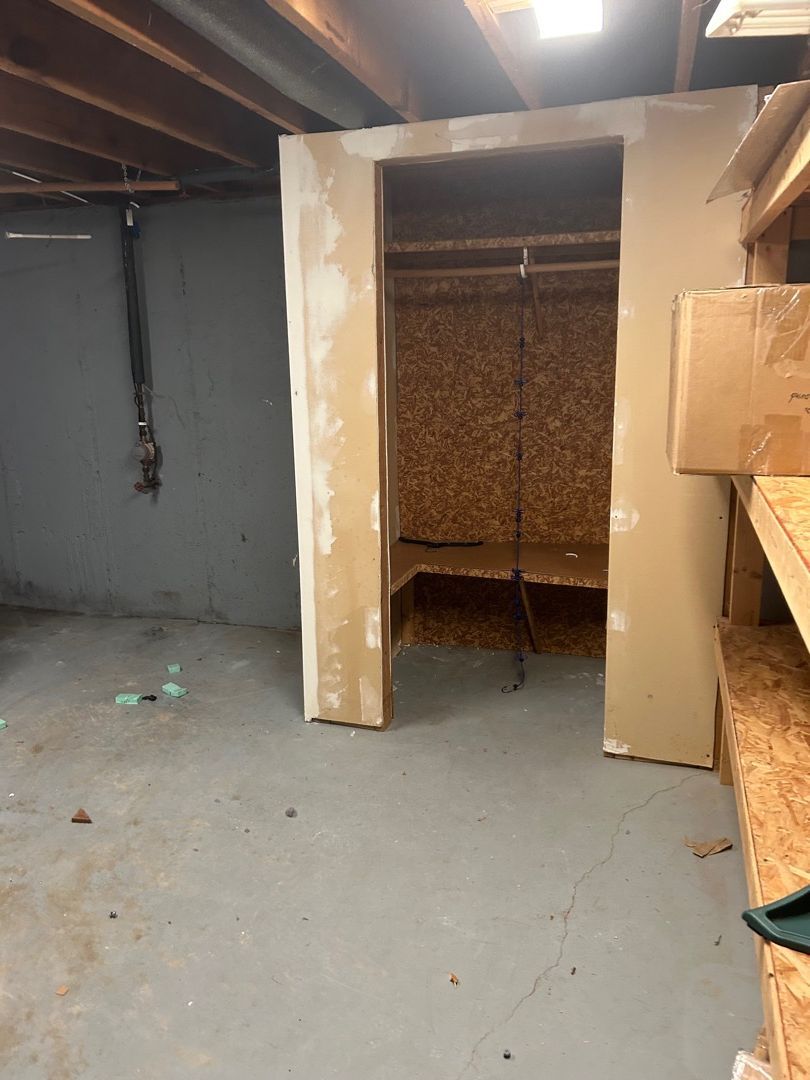
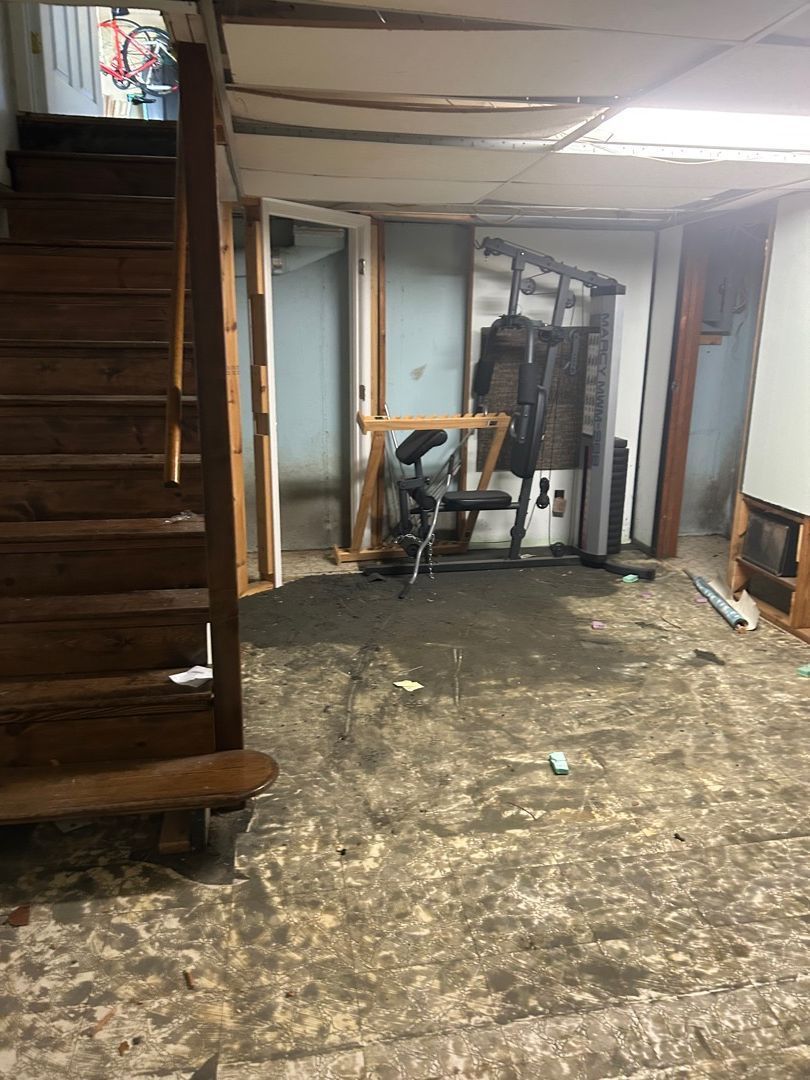
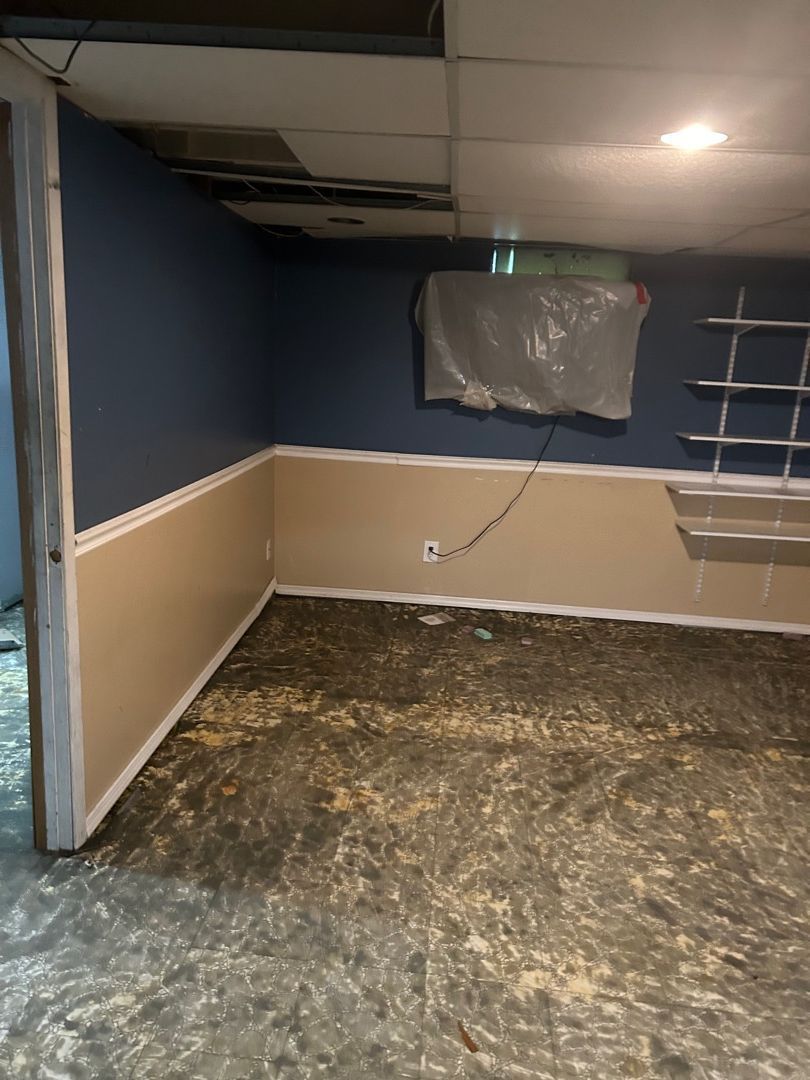
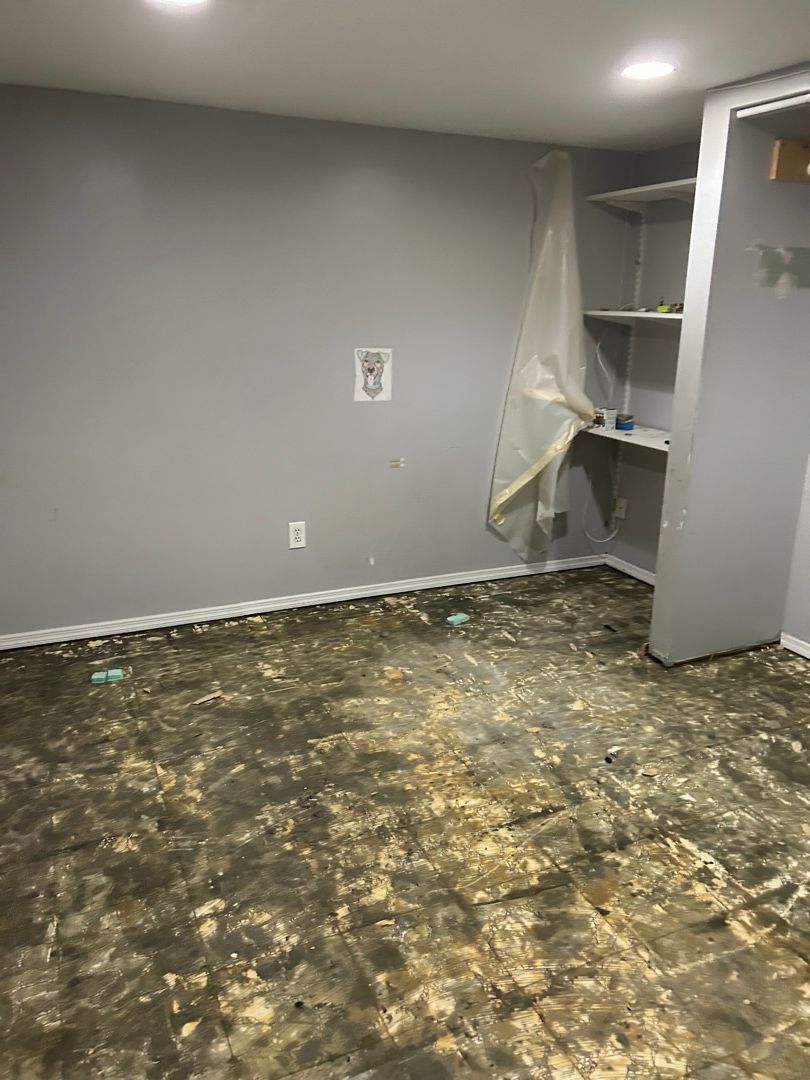
Once the basement was dried and cleared out, we moved into the demolition phase. Saturated carpet, pad, and damaged drywall had to go. In several rooms, we cut drywall up to the flood line and removed baseboards to expose the framing behind them. That step is critical because drywall acts like a sponge. If you leave wet drywall in place, you're inviting mold to move in.
The photos below show the basement after demo, with rooms cleared to the studs and concrete floors exposed. The EPA recommends removing porous materials that can't be adequately dried within 24 to 48 hours to prevent mold growth. That's exactly what we did here.
 |
 |
 |
 |
 |
 |
 |
 |
 |
What Makes This Kind of Project Different?
A finished basement isn't like an unfinished one. There's more at stake. You've got carpet, drywall, trim, electrical outlets, and personal belongings all packed into a space that sits below grade. When water gets in, it affects everything.
This project required coordination across multiple phases: emergency extraction, professional drying with moisture monitoring, a careful pack-out of the homeowner's belongings, controlled demolition of unsalvageable materials, and finally, prepping the space for structural repair and reconstruction. With ABC Environmental handling every step, the homeowner had one point of contact instead of juggling multiple contractors.
Need Help With Basement Water Damage in the St. Louis Area?
If your basement is flooded or you're dealing with water damage, don't wait. The longer water sits, the worse the damage gets. Our team is available 24/7 for emergency response across the greater St. Louis metro, including Florissant, Chesterfield, O'Fallon, and surrounding areas. Contact ABC Environmental Contracting Services for a free estimate.
Related Resources
Want to learn more about water damage restoration and what to expect during the process? Check out these helpful resources from our team:
- Professional Content Pack-Out Services
- Preventing Recurring Water Problems
- Case Study: Burst Pipe Floods St. Louis Basement
Frequently Asked Questions
How long does it take to dry out a flooded basement?
Professional structural drying for a flooded basement typically takes 3 to 5 days, depending on the severity of the water intrusion, the materials affected, and the humidity levels in the space. Our team monitors moisture readings daily and won't pull equipment until the structure meets dry standards.
What is a contents pack-out and why would I need one?
A contents pack-out is the professional process of inventorying, carefully packing, and transporting your personal belongings to a secure facility for cleaning and storage while restoration work takes place. It's necessary when water damage is extensive enough that belongings can't safely stay in the home during drying and demolition.
Does homeowner's insurance cover basement water damage restoration?
Most homeowner's insurance policies cover sudden and accidental water damage, like a burst pipe or appliance failure. Coverage for flooding from external sources typically requires a separate flood policy. ABC Environmental works directly with insurance adjusters to document the damage and support your claim.
Can ABC Environmental handle the full rebuild after water damage?
Yes. ABC Environmental Contracting Services handles everything from emergency water extraction and drying through demolition and full reconstruction. Having one company manage the entire project means fewer delays, better communication, and a smoother experience from start to finish.
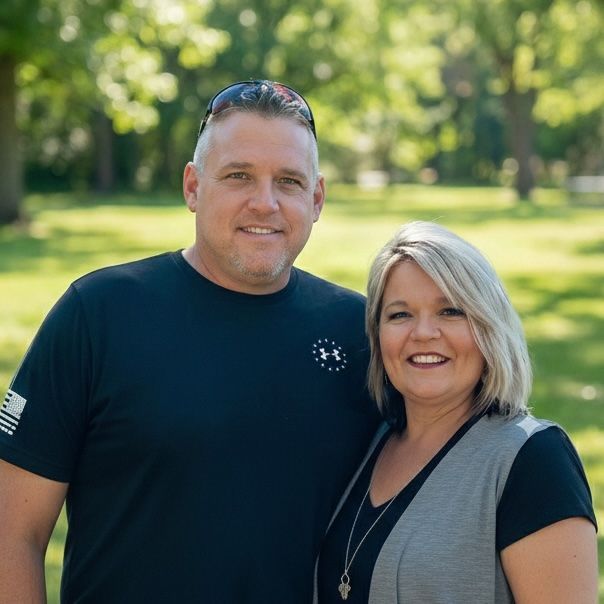
Dan and Tina Benton are the owners of ABC Environmental Contracting Services, a veteran-owned restoration company serving the St. Louis Metro East area. Together, they bring over two decades of expertise in water damage restoration, mold remediation, and asbestos removal for both residential and commercial properties. They're committed to serving their community with integrity and dedication, providing 24/7 emergency response when disaster strikes.