What Rebuilding After a House Fire Actually Involves: A Realistic Timeline
- How Long Does Rebuilding After a House Fire Take?
- Phase 1: Securing the Site and Assessing the Damage
- Phase 2: Demolition and Debris Removal
- Phase 3: Permitting and Planning
- Phase 4: Framing and Rough-In Work
- Phase 5: Finish Work and Final Inspections
- Realistic Rebuild Timeline at a Glance
- What Keeps a Rebuild on Track
- Frequently Asked Questions
Rebuilding after a house fire usually takes three months to a year or more, depending on how much burned and how fast permits move. At ABC Environmental Contracting Services, our IICRC certified team guides St Louis families through each step. We start with a professional fire damage restoration assessment and stay through the final walkthrough.
The fire is over in hours. Recovery is not. It comes in phases, each moving at its own pace. Here's what happens, in order, so you know what's coming.
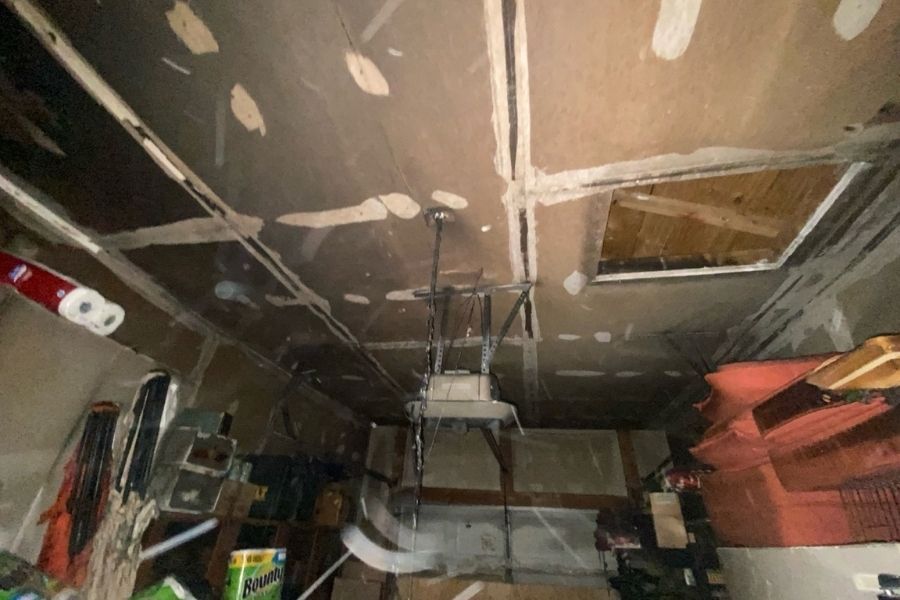
Charring, smoke staining, and weakened framing all get logged before any rebuild work starts.
How Long Does Rebuilding After a House Fire Take?
Most full rebuilds take three to twelve months, from cleanup to move-in. Heavy structural damage can take longer. Timing depends on the damage size, how fast your insurer approves the work, and how busy the permit office is. No two fires are the same.
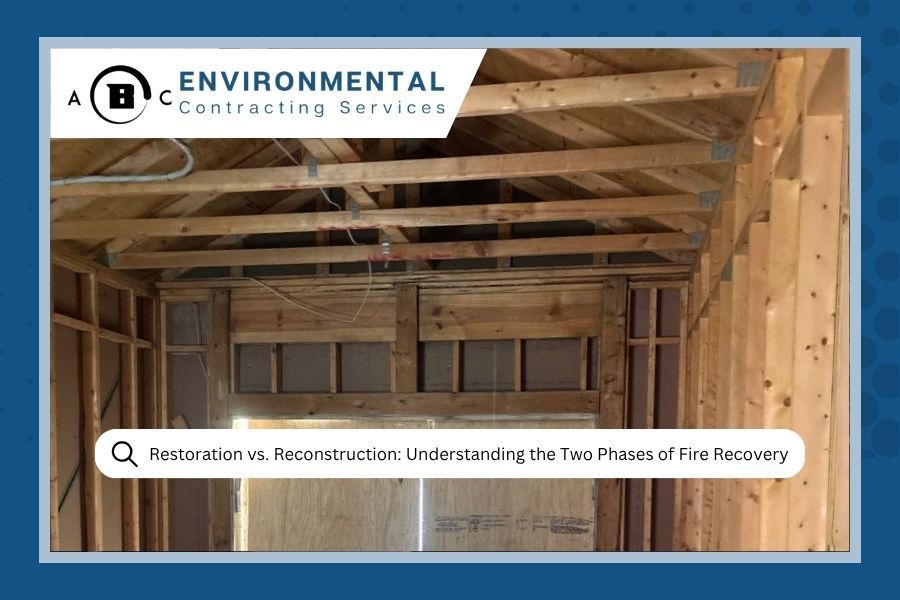
Recovery actually breaks into two big stages that follow one another. First is restoration, the cleanup and stabilizing. Then comes reconstruction, the actual rebuild. Our guide on restoration versus reconstruction explains the split, the key to reading your own timeline.
Phase 1: Securing the Site and Assessing the Damage
The first phase is about safety, and it moves fast. Crews board up openings, tarp the roof, and cut damaged utilities. That stops the home from taking more harm. Then they inspect what can be saved and what cannot.
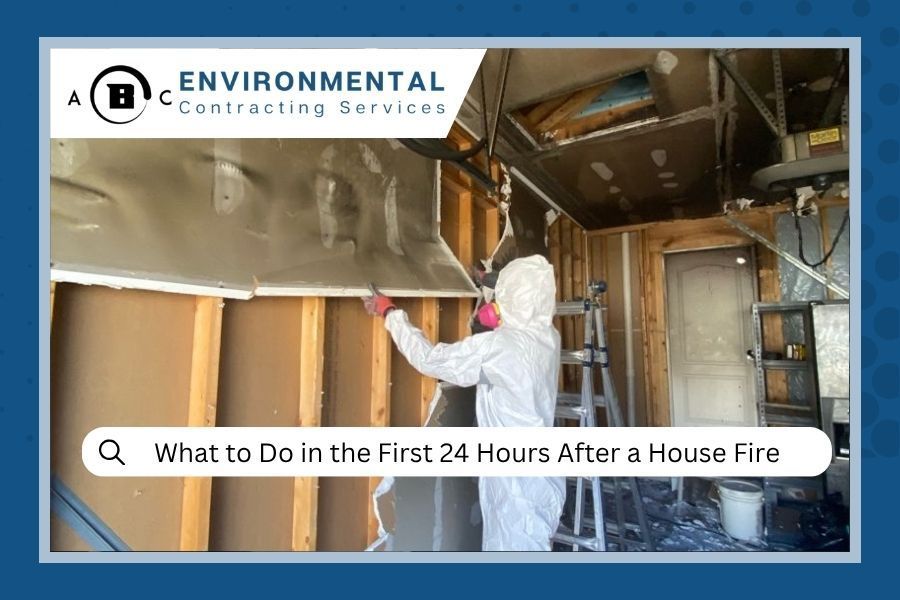
This is when the stress hits hardest. The U.S. Fire Administration's After a Fire recovery resource lists the first steps, like calling your insurer and saving receipts. Still in those early hours? Our guide on what to do in the first 24 hours after a house fire can help.
A good assessment looks past the obvious burn marks. Smoke travels, and soot settles in rooms the flames never reached. Water from the hoses soaks into subfloors and walls. It all gets logged for the claim.
Not sure where your rebuild should start?
Our veteran-owned team handles fire recovery from cleanup through full reconstruction, all under one roof.
Contact Our Team TodayPhase 2: Demolition and Debris Removal
Demolition clears out what the fire ruined so the rebuild starts on solid ground. It usually takes one to three weeks. Crews pull out charred framing, ruined drywall, damaged flooring, and wet insulation, then haul it away for safe disposal.
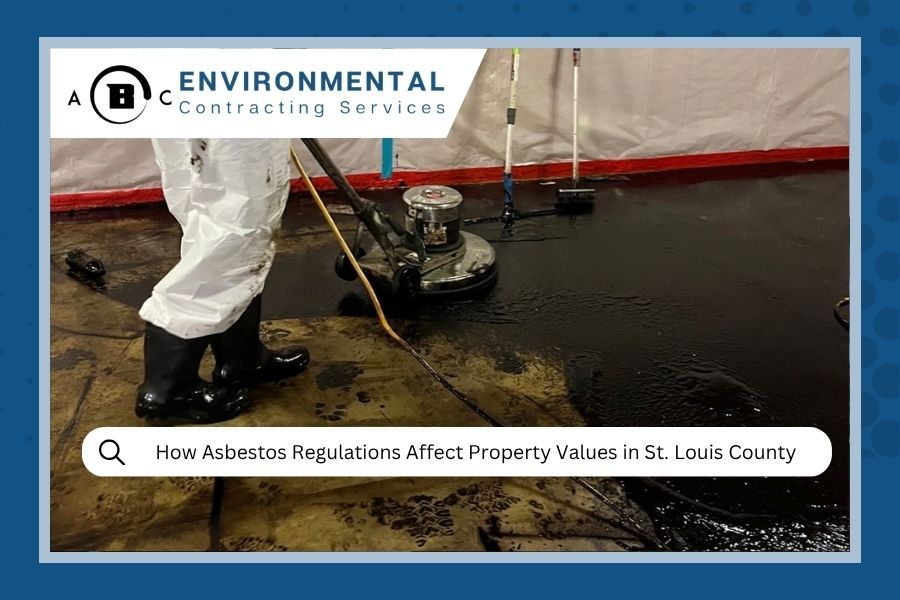
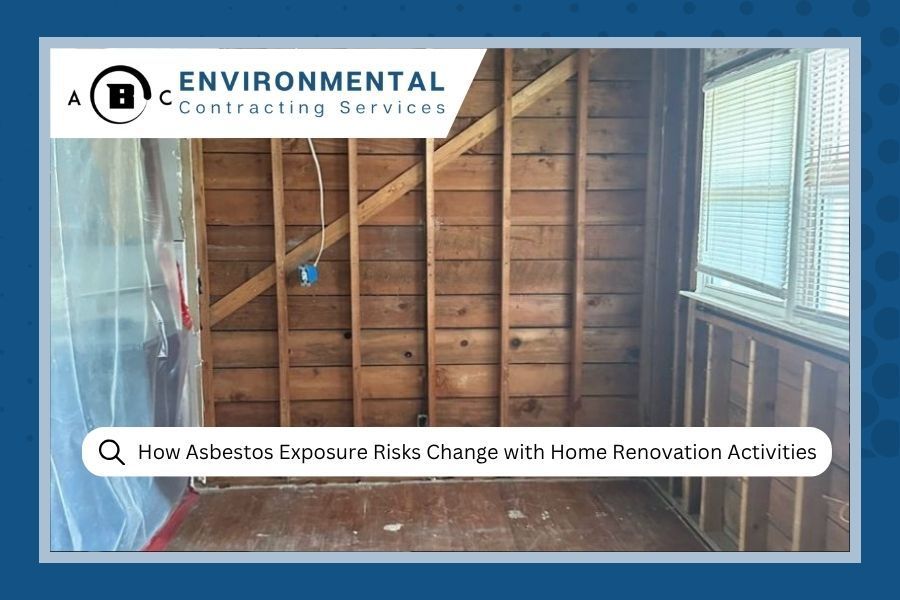
Older St Louis homes need extra care here. Houses built before the 1980s often hold asbestos in floor tile, insulation, and popcorn ceilings. Disturbing it during demo sends fibers into the air. The EPA covers the risks in its guide on how to protect your family from asbestos exposure.
Because we're a full environmental company, we test for hazards and remove them safely alongside the fire work. Our controlled demolition crews take out only what has to go, protecting the parts worth keeping.
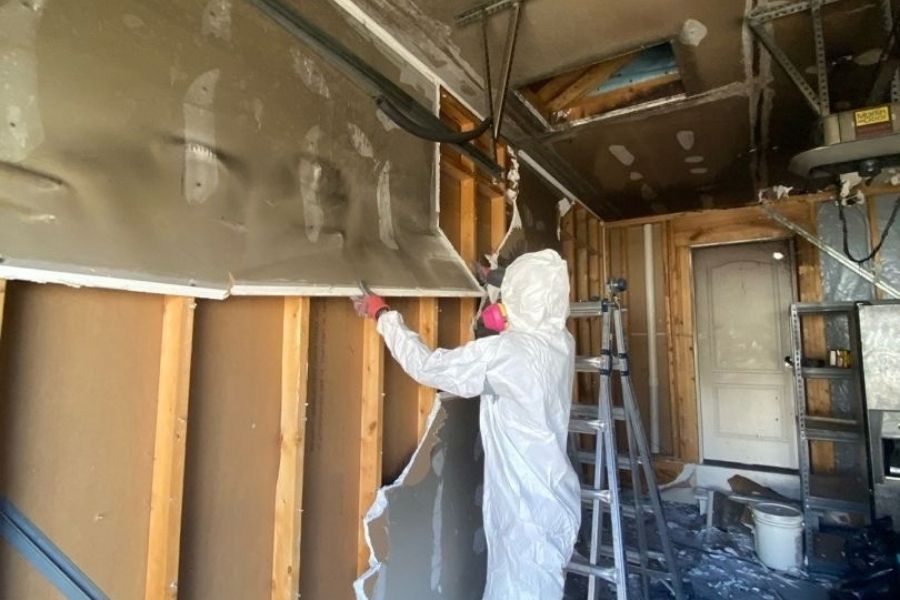
Careful demolition strips the home back to sound structure so reconstruction can begin.
Phase 3: Permitting and Planning
Permitting catches people off guard, because it's mostly waiting. Pulling the right building permits can take a few days or a few weeks. Fire rebuilds often need permits for structure, electrical, plumbing, and heating all at once.
Local know-how pays off here. Codes and inspection dates change from town to town. A contractor who works with St Louis area permit offices often can keep the paperwork moving instead of stuck in line.
Planning happens at the same time. Your claim, the design, and your material choices all get set now. If your claim is still open, our breakdown of filing a fire damage insurance claim in Missouri can help you avoid common delays.
Phase 4: Framing and Rough-In Work
Framing is when the house looks like a house again. This phase rebuilds the bones: walls, roof trusses, subfloors, and support beams. Framing and rough-in usually run three to eight weeks.
Once the frame is up, the trades move in. Electricians, plumbers, and heating crews run their lines through the open walls before drywall closes them up. Each system gets its own inspection first.
Getting the structure right is not optional. That's why structural repairs after fire and smoke damage belong with an experienced crew. Fire weakens materials in ways you can't see, and shortcuts here show up years later.
Phase 5: Finish Work and Final Inspections
Finish work is the longest run of visible progress, usually four to ten weeks. This is where your house becomes livable again. Insulation goes in, drywall gets hung and painted, and floors, trim, cabinets, and fixtures all get set.
As the rooms come together, final inspections check that each system meets code. Once the last one passes, the certificate of occupancy arrives. Then we walk the home with you, room by room, before you move back in.
Realistic Rebuild Timeline at a Glance
Every rebuild is different, but this shows how the phases stack up. Some overlap, since permitting can run in the background.
| Phase | What Happens | Typical Timeframe |
|---|---|---|
| 1. Secure and Assess | Board-up, tarping, damage assessment, insurance scope | Days |
| 2. Demolition | Remove damaged materials, hazardous material handling, cleanup | 1 to 3 weeks |
| 3. Permitting and Planning | Building permits, design, material selections | Days to several weeks |
| 4. Framing and Rough-In | Structure, electrical, plumbing, HVAC, inspections | 3 to 8 weeks |
| 5. Finish and Final | Drywall, paint, flooring, fixtures, final inspections | 4 to 10 weeks |
What Keeps a Rebuild on Track
A few habits separate a smooth rebuild from a stalled one. Most delays come from slow choices or poor communication, and you can get ahead of both.
- ➡️ Report the loss to your insurer right away and save every receipt.
- ➡️ Choose one contractor who handles both cleanup and reconstruction.
- ➡️ Make material and finish choices early, before framing wraps.
- ➡️ Ask for a written phase schedule so you know what's next.
- ➡️ Keep a single point of contact for questions and approvals.
When one team owns the whole job, nothing slips between handoffs. That's the edge of a full-service crew over hiring separate cleanup, demo, and rebuild companies.
Frequently Asked Questions
Can I live in my home during a fire rebuild?
In most cases, no. During demolition and structural work, the home is not safe to live in. The certificate of occupancy comes only after final inspections pass. Many families use their policy's loss-of-use coverage for temporary housing.
Does one company handle both cleanup and rebuilding?
Some do, and it saves real time. ABC Environmental Contracting Services runs fire recovery from the first board-up through the final walkthrough. One team means fewer handoffs and a tighter timeline.
Why does permitting take so long after a fire?
Fire rebuilds usually need several permits at once. Each town reviews on its own schedule, so timing varies. A contractor who knows the local offices keeps the paperwork moving.
What causes the biggest delays in a rebuild?
Slow insurance approvals, late material choices, and permit backlogs top the list. Hidden damage, like asbestos or water behind walls, adds time too. That's why a careful assessment up front matters.
Dan and Tina Benton are the owners of ABC Environmental Contracting Services, a veteran-owned restoration company serving the St. Louis Metro East area. Together, they bring over two decades of expertise in water damage restoration, mold remediation, and asbestos removal for both residential and commercial properties. They're committed to serving their community with integrity and dedication, providing 24/7 emergency response when disaster strikes.